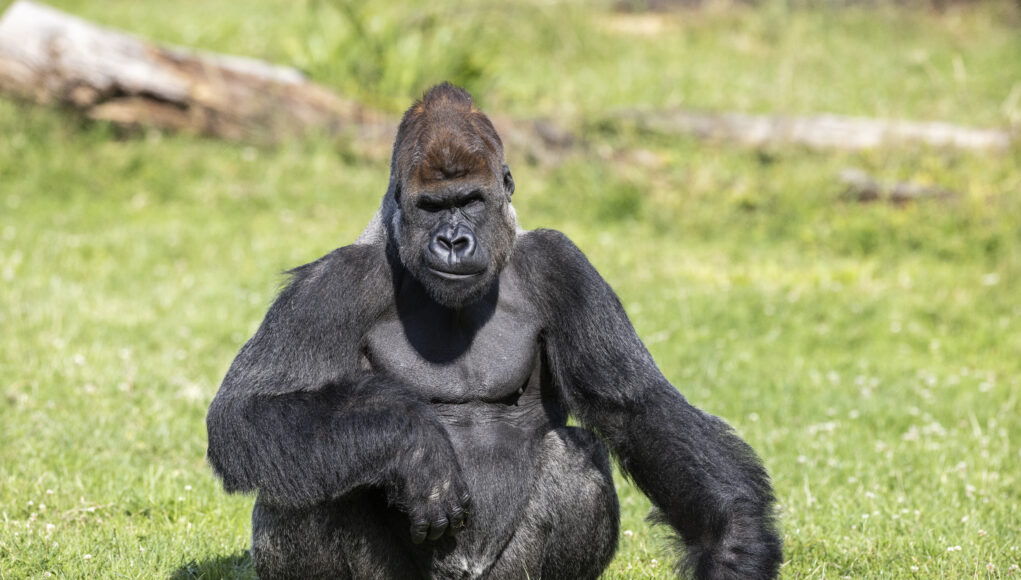
Fleetwood Mac’s Everywhere may be a chart-topping classic, but at Longleat Safari Park it holds a very different reputation — as the one song a gorilla simply can’t tolerate.
A newly published scientific paper has revealed how the track triggered distress in Kesho, a 25-year-old western lowland gorilla living at Longleat in Wiltshire, offering rare insight into how sound, routine and individual care can shape the welfare of animals with complex needs.
The findings appear in the international journal Zoo Biology and focus on Kesho’s diagnosis of Klinefelter’s Syndrome — a genetic condition affecting males who are born with an extra X chromosome. Kesho is one of only two non-human primates known to have been diagnosed with the condition.

The study was carried out by Longleat keepers Matthew Hardy and Lauren Bow, alongside Conservation and Research Manager Dr Tom Lewis, and draws on more than a decade of close observation and tailored care.
Sound plays an important role in the daily management of Longleat’s gorilla group. A radio is routinely left playing in their house to soften unexpected noises such as thunder or alarms. While this generally helps reduce anxiety, keepers noticed that the opening bars of Everywhere had the opposite effect on Kesho, causing agitation and aggressive behaviour towards other gorillas.
Matt Hardy said the team gradually came to understand just how sensitive Kesho is to change.
“Kesho doesn’t like anything new,” he explained. “He’s sensitive to sound, struggles with problem-solving, has mood swings and interacts differently with other gorillas. Sudden loud noises can be very unsettling for him.”
The team adapted their approach accordingly. Fire alarm tests, for example, are carried out while Kesho remains in his enclosure so he knows what to expect. The radio stays on to mask unpredictable sounds, but music choices are carefully managed.
Routine has also become central to his care. While the rest of the gorilla group is weighed weekly, Kesho is asked to enter the weigh pen every day, turning an occasional task into a familiar part of his daily pattern.
“This way, when it matters, it doesn’t feel unusual to him,” Matt said. “Knowing what’s coming next makes a big difference.”
The third area the team focused on was health. With veterinary guidance, Kesho now receives treatment at the earliest signs of illness, helping issues pass more quickly than in the past.
Dr Tom Lewis said the publication of the paper reflects the depth of knowledge developed by the keeper team.
“Having this work published in Zoo Biology means our experience is now available to the global zoo community,” he said. “It provides a practical reference for managing gorillas with Klinefelter’s Syndrome and reinforces the importance of individual care plans.”
With around 753 gorillas currently living in human care worldwide, and Klinefelter’s Syndrome affecting roughly one in 450 human males, the researchers believe more cases may be identified in future.
The paper also raises questions about how the condition presents in animals. While some characteristics mirror those reported by humans with Klinefelter’s Syndrome, others — such as heightened anxiety and a strong need for familiarity — appear less commonly described.
“These traits may be more pronounced in animals, specific to gorillas, or simply part of Kesho’s individual personality,” Dr Tom added. “Zoos are in a strong position to help advance understanding in this area while continuing to improve welfare standards.”
Darren Beasley, Head of Animal Operations at Longleat, said the study highlights the value of truly knowing the animals in human care.
“This work shows just how detailed and thoughtful animal care can be,” he said. “Understanding why Kesho reacts the way he does has had a real impact on his wellbeing, and the lessons learned will support gorilla care and conservation long into the future.”