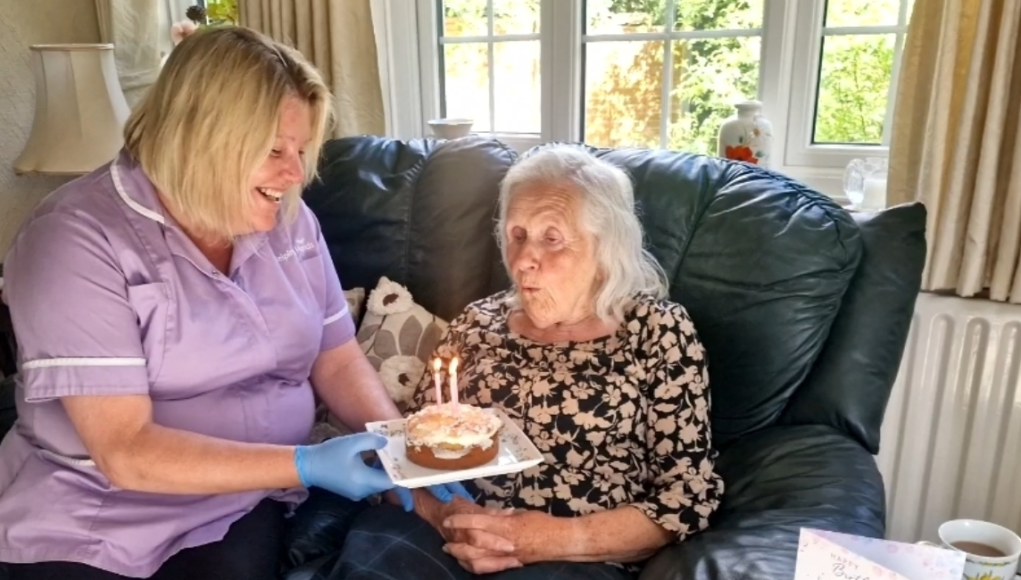
A care provider with a strong presence in Swindon says demand for support at home continues to rise, as more families opt for familiar surroundings over residential settings.
Helping Hands Home Care has published its latest impact report, setting out a year of steady growth alongside consistently high satisfaction ratings. The figures point to a service that’s expanding, but also one that’s under pressure to keep pace with a changing care landscape.
Over the past year, the company supported more than 15,000 customers across the UK—an increase that reflects a broader shift towards care delivered in people’s own homes. For many, it’s a practical choice as much as a personal one, allowing individuals to remain in familiar surroundings while receiving tailored support.

That emphasis on personalised care appears to be paying off. The provider’s average rating on Homecare.co.uk now stands at 9.1 out of 10, with some local branches scoring as high as 9.7. Meanwhile, reviews on Trustpilot place it at 4.7 out of 5, based on thousands of responses from families and service users.
Regulators have also taken a favourable view. According to the report, 99 per cent of branches inspected by the Care Quality Commission were rated ‘Good’, ‘Excellent’ or ‘Outstanding’—benchmarks that carry weight in a sector often under scrutiny.
Behind those figures is a sizeable workforce. The company employs around 6,100 carers, who together delivered more than five million hours of support over the year, ranging from short visits to full-time live-in care. Its contact centre handled upwards of 90,000 calls, offering round-the-clock advice for customers and their families.
Emma Pearson, Chief Executive of Helping Hands, said the report highlights the day-to-day impact of care staff working across the country. She pointed to a continued focus on quality and customer experience, alongside expansion that has seen ten new branches open during 2025.
There’s a clear commercial story here—growth, new locations, rising demand—but it sits alongside a wider social reality. An ageing population, stretched public services and changing expectations around independence are all feeding into the need for care at home.
For Swindon, where demand for health and social care support mirrors national trends, the figures underline how central providers like Helping Hands have become in filling that gap.
Looking ahead, the company says it will continue investing in staff and services through 2026. Whether it can maintain its current standards while expanding further will be the question many in the sector will be watching closely.