Rail passengers heading through Bath later this month are being told to check before they travel, as a series of engineering works get underway on two of the West’s most significant railway landmarks.
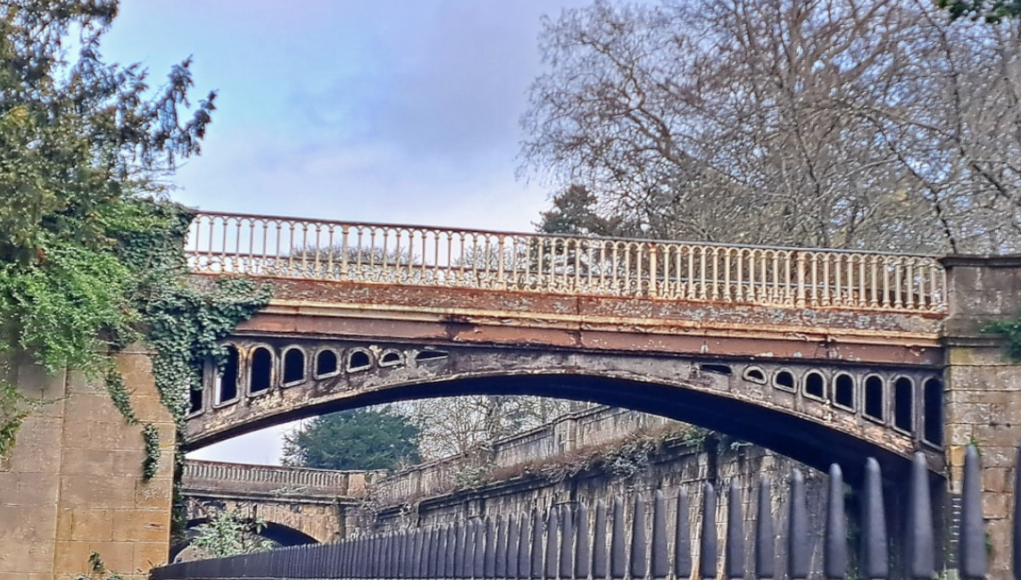
At the centre of it is Sydney Gardens footbridge — a rare survivor from the early days of the Great Western Railway, designed by Isambard Kingdom Brunel. It’s the last cast-iron footbridge of its kind on the line, and one that has quietly endured in one of the country’s oldest Georgian pleasure gardens.
Over the coming weeks, it will be given a thorough overhaul. That means grit-blasting, structural repairs, repainting and a complete replacement of its timber deck. To contain the work and protect the surrounding parkland, the structure will be fully wrapped — not especially pretty, but necessary.

Further east, attention turns to Box Tunnel, another piece of Brunel’s legacy. Engineers will be carrying out repairs and surveys on the Grade II listed eastern portal near Corsham, part of ongoing efforts to preserve one of Britain’s earliest major railway tunnels.
The work itself is one thing. Getting it done without grinding the railway to a halt is another.
To that end, closures are planned between Bath Spa and Chippenham across two weekends — 25–26 April and 2–4 May — with additional disruption between Swindon and Westbury on the first of those dates. During these periods, buses will replace trains on affected routes, and some services will be diverted, notably those between London Paddington and Bath Spa, which will run via Bristol and skip Chippenham altogether.
Network Rail says the timing is deliberate, bundling multiple pieces of maintenance into the same windows to limit longer-term disruption. Alongside the headline restoration work, there will also be track renewal at Bathford and drainage improvements near Corsham.
For passengers, though, the detail matters less than the practicalities. Journeys will take longer, routes will change, and some stations won’t be served in the usual way. Ticket acceptance on local bus services should soften the blow, but only to a point.
From a heritage perspective, the work is hard to argue with. Both structures are part of a railway history that still shapes the network today, and neither can simply be left to weather quietly.
For now, it’s a trade-off: a few disrupted weekends in exchange for preserving a piece of Brunel’s legacy that continues to carry passengers nearly two centuries on.