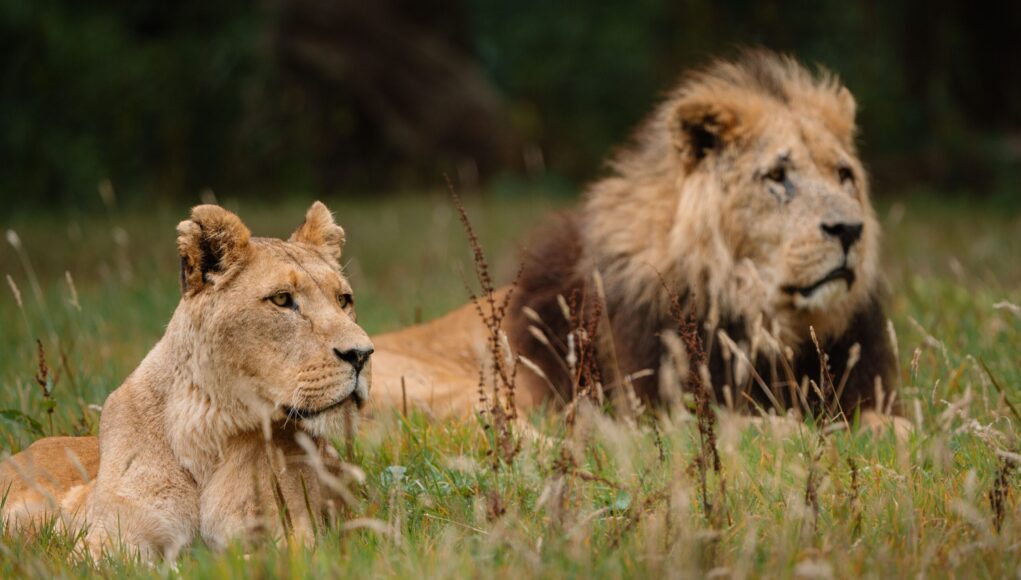
It’s not often a Wiltshire lioness finds herself linked to space exploration, but then Malaika was never an ordinary big cat.
The former pride leader at Longleat Safari Park has become the unlikely inspiration behind a new tyre design that could one day help vehicles grip everything from muddy farmland to the surface of Mars.
Developed by Sunil Dhillon, the concept takes its cues directly from Malaika’s paws — studying how lions distribute weight, maintain traction and adapt to changing terrain. The result is a “biomimetic” tyre that mirrors the shape and function of a lion’s foot.

Dhillon, working with teams at University of Warwick and University of Oxford, as well as industry partners, has already secured a patent for the design. A working prototype vehicle — dubbed the Malaika — is expected later this year.
At its core, the idea is deceptively simple. Lions move across a wide range of surfaces — wet ground, dry clay, loose sand — without the slippage or soil damage that wheeled vehicles often cause. By replicating those mechanics, Dhillon believes machinery could achieve better grip while reducing the environmental impact.
For farmers, that could mean improved productivity without degrading soil health. For space agencies, the implications are rather more ambitious.
Interest has already been shown by NASA, with the design’s adaptability raising the possibility of its use in future Mars rover missions. The ability to handle unpredictable, shifting terrain without loss of traction is, after all, as useful on another planet as it is in a Wiltshire field.
The research didn’t stop at Longleat. Observations from Serengeti National Park helped build a broader picture of how lions respond to environmental changes, reinforcing the design’s flexibility across different conditions.
There’s more going on beneath the surface, too. The tyre incorporates structures inspired by honeycomb patterns and spider webs, allowing it to flex and respond dynamically rather than behave like a rigid wheel. It’s a blend of biology and engineering that feels both complex and oddly intuitive.
For those at Longleat, the project has offered a glimpse into a different kind of conservation impact. Dr Tom Lewis, the estate’s conservation and research manager, describes the collaboration as an unexpected but fascinating extension of their work.
Malaika herself died last year, just shy of her 20th birthday. Now, in a way few could have predicted, her legacy may extend far beyond the Wiltshire estate — potentially as far as the Martian surface.
Not bad for a lioness who once simply padded across a field in Longleat.