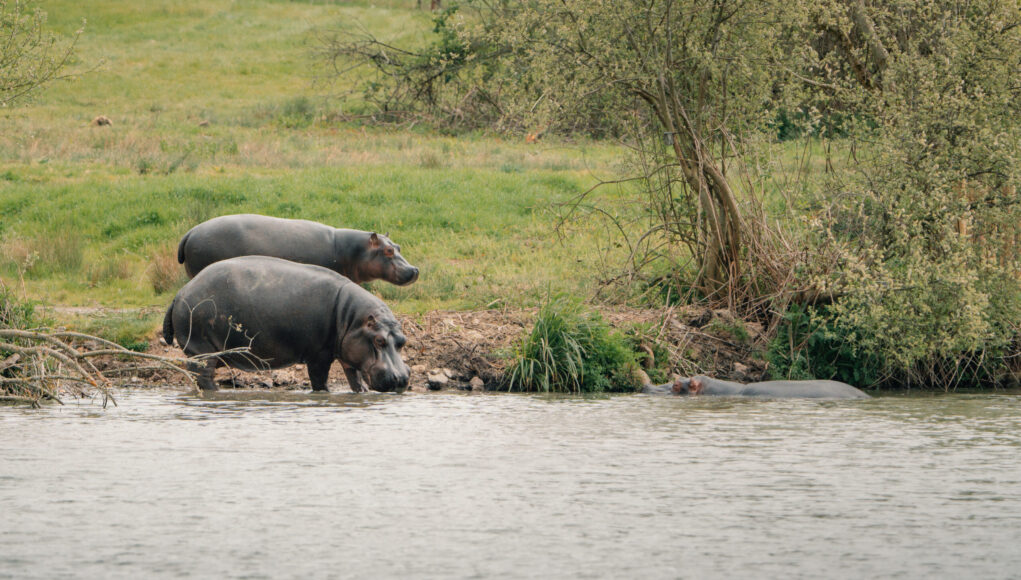
There’s a new splash of life at Longleat Safari Park, where a quartet of hippos has begun exploring its latest stomping ground.
Lola, Matylda, Manon and Hodor — a newly formed pod — can now be seen wallowing in Half Mile Pond, having spent recent months settling into their purpose-built indoor home, the so-called “hippodrome”, after arriving last summer.
Keepers have taken a steady approach, allowing the animals time to adjust not just to one another, but to their surroundings — from unfamiliar sounds to the rhythms of daily life on the estate. Now, with access to grazing paddocks and open water, the group has been given the freedom to roam, returning when needed for checks, shelter, or the promise of food.

Visitors can catch a glimpse of the hippos from the water itself, with sightings possible on the park’s Jungle Cruise — a boat safari that also passes gorillas, colobus monkeys and the ever-popular sea lions.
Darren Beasley, Head of Animal Operations, says the moment has been a long time coming.
“We are so pleased at the way the four have settled in,” he said. “We always said we wanted to ensure they had the time to get to know each other, their keepers and the sounds of the other animals which live in the area.”
Their return to Half Mile Pond is particularly timely, coinciding with the park’s 60th anniversary year. Hippos were once a longstanding feature at Longleat, and their absence has been keenly felt since the deaths of Sonia and Spot, who lived there for decades.
“It is exciting to have hippos return during this anniversary year,” Darren added. “We all hugely missed them.”
Despite their size and reputation, hippos are not natural swimmers. Instead, they move by walking along riverbeds — a detail reflected in their scientific name, derived from the Greek for “river horse”.
Where exactly this new pod will choose to spend its time remains to be seen. For now, keepers — and visitors alike — are watching with interest.
Beyond the spectacle, there is a wider aim at play. The animals are part of an ongoing conservation effort, with hopes they will contribute to a breeding programme supporting a species considered vulnerable in the wild.
Longleat itself holds a place in British wildlife history, having opened in 1966 as the first drive-through safari park outside Africa. Six decades on, the arrival of a new generation of animals suggests it is not done evolving just yet.