There’s a simple expectation when someone dials for help—that it arrives quickly, without fuss, and without question. What tends to go unseen is what it takes to keep that promise.
For Wiltshire and Bath Air Ambulance Charity, the cost of doing just that has risen sharply in recent months, and not for reasons close to home.
The charity says its aviation fuel costs have more than doubled, driven by disruption linked to ongoing tensions in the Middle East. It’s a reminder that even a local service—one that operates across Wiltshire and Bath—can be affected by events unfolding thousands of miles away.

Much of Europe’s aviation fuel supply passes through the Strait of Hormuz, a critical route that has been under increasing strain. The knock-on effect has been higher prices across the board, with charities like this one feeling the impact directly.
Recently, the organisation secured 15,000 litres of fuel to keep its helicopter operational. But at current prices, that comes at a far greater cost than it once did.
And the demand hasn’t changed.
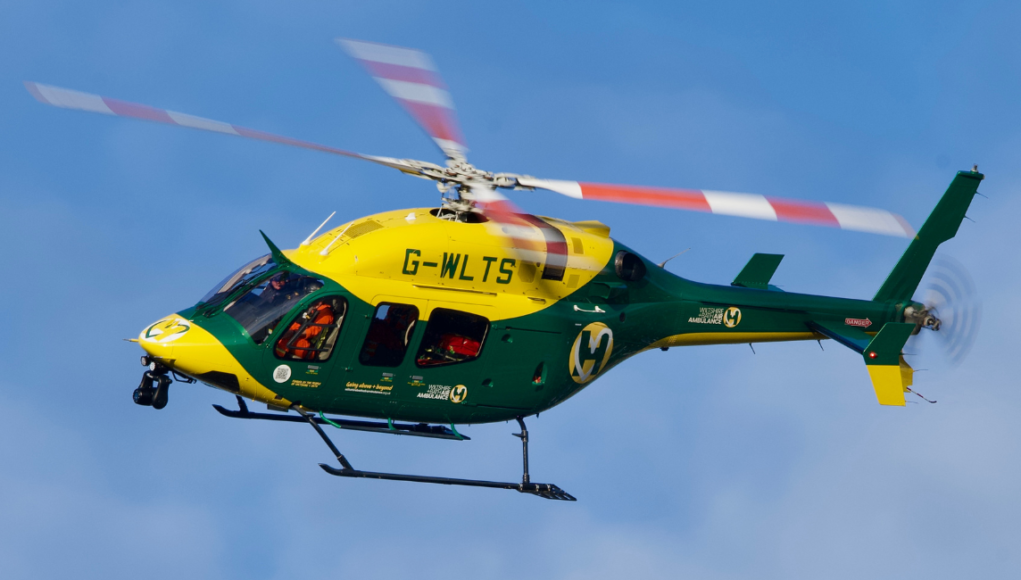
On average, the team responds to three incidents a day, operating for up to 19 hours, reaching patients by air or road. The helicopter, when deployed, can cover the entire region in around 11 minutes—a figure often quoted, but no less important for its familiarity.
Unlike many emergency services, the air ambulance receives no regular government funding. Its work relies almost entirely on donations, fundraising and community support. Rising costs, therefore, aren’t absorbed quietly—they have to be met head-on.
Chief Executive Barbara Gray said the charity is keeping a close eye on the situation, balancing the need to manage increasing expenses with the priority of maintaining frontline care. The focus, she said, remains firmly on ensuring crews can continue to respond when needed.
It’s a careful balancing act. Fuel is just one part of the equation, but it’s a crucial one. Without it, the helicopter doesn’t fly, and the speed that defines the service becomes impossible.
For those on the ground, little will appear to have changed. The aircraft still lifts, the crews still respond, and help still arrives when it’s needed most.
But behind the scenes, the cost of making that happen is rising—and, as ever, it’s the support of the public that will determine whether it can continue at the same pace.