Keepers at Longleat are celebrating the successful hand-rearing of an endangered secretary bird chick, born just five weeks ago at the Wiltshire safari park.
The chick, whose gender remains unknown at this stage, was born to seven-year-old Janine and her nine-year-old partner Kevin. Both parents are part of an important international breeding programme aimed at protecting this remarkable species, which continues to face serious threats in the wild.
Despite the parents’ previous success in raising chicks — including one now residing at a zoo in Singapore — this breeding season presented unexpected challenges. Several earlier eggs were either broken or mysteriously vanished from the nest, prompting keepers to intervene.

Matt Hardy, Lead Keeper for Lakes and Birds at Longleat, explained: “The parents were struggling to incubate their eggs this year. After losing a few, we decided to artificially incubate this one with the hope of returning it to the parents after hatching. Unfortunately, by the time it hatched, the nest had already been abandoned, so we’ve continued to care for it ourselves.”
Initially requiring five to six feeds daily, the chick is now thriving on a routine of three feeds each day as it grows stronger. The team at Longleat remain hopeful that the chick will one day contribute to the global breeding programme.
The secretary bird, known scientifically as Sagittarius serpentarius, is listed as endangered, primarily due to widespread habitat loss, illegal hunting, and trade. In the wild, their numbers have fallen sharply, making captive breeding efforts even more critical.
In total, eight chicks have successfully hatched within the programme over the past 12 months, including two at Longleat. Kevin and Janine, who have been part of the park’s bird collection since 2018, first reared a chick successfully in 2021.
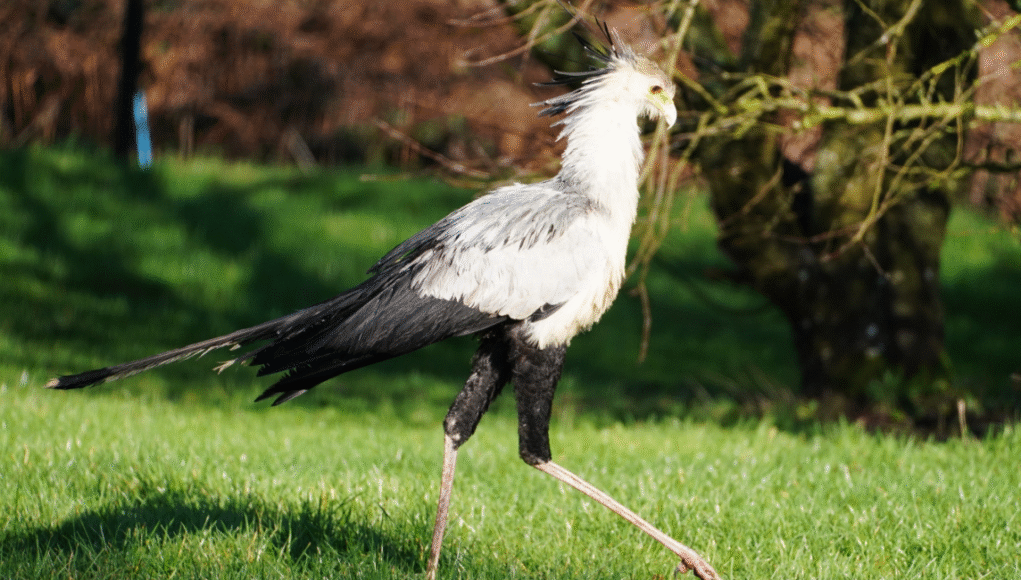
With an average lifespan of 10 to 15 years, these unique birds are instantly recognisable with their long legs, sharp beak, and characteristic crest of feathers — a combination that has captivated visitors and conservationists alike.
Longleat’s dedication to the welfare of these extraordinary creatures offers a small but significant glimmer of hope for a species facing an uncertain future.