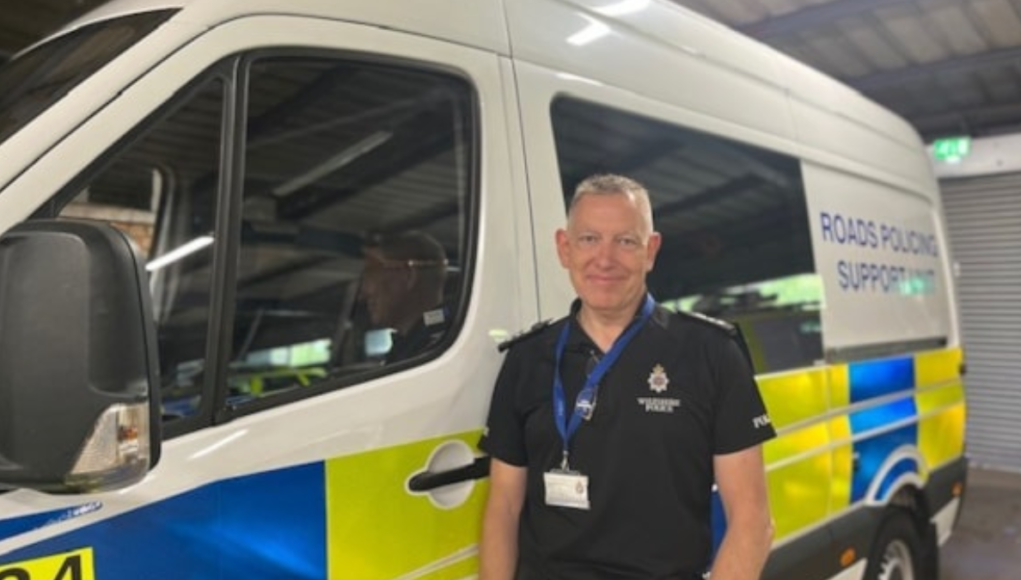
In the early 90s, a life-altering event set the course for a young man who would go on to dedicate nearly 25 years of his life to roads policing. Sgt Rich Hatch, now a seasoned officer with Wiltshire Police, was profoundly influenced by a traffic officer who showed exceptional compassion and understanding when dealing with a collision involving his father.
Recounting the experience, Sgt Hatch said, “The officer saved my father’s life by taking the time to understand why he’d had a collision that he should not really have had.” The officer’s thoughtful approach led to the discovery that his father had a blind spot in his vision, a symptom of a more serious issue—a brain tumour. This life-saving intervention inspired Hatch to follow in the footsteps of the traffic cop, dedicating his career to roads policing.
Today, Sgt Hatch leads the Serious Collision Investigation Team (SCIT), a specialised unit responsible for investigating the majority of fatal and life-changing collisions in Wiltshire. His team, consisting of nine highly trained officers, faces many challenges, not least of which is the often hostile reception they receive from drivers and onlookers at the scenes of road closures.

Explaining the importance of these closures, Sgt Hatch said, “When a fatality is confirmed, we will deploy from Police Headquarters to the scene and begin the investigation process.” The process is meticulous and time-consuming, involving the Roads Policing Lead Investigator, who oversees all investigative decisions, and the Forensic Collision Investigation Unit (FCIU), which collects and records vital physical data. High-definition laser scans and 3D drone images are just part of the extensive evidence-gathering efforts required to present a clear picture in court.
Despite the critical nature of their work, Hatch’s team is frequently met with frustration from road users. “Scenes by their volatile nature can take many hours to complete, but working together, we try to reduce the impact these events have on our communities and the wider infrastructure,” he said.
Reflecting on his years of service, Sgt Hatch expressed concern about the erosion of respect among road users. “Whilst we appreciate that there are enormous pressures placed on people in the UK, and the roads are very congested, it seems that a lot of drivers have forgotten to be nice,” he remarked. He urged drivers to consider the safety of the most vulnerable road users—pedestrians, cyclists, and motorcyclists—who are often treated as inconveniences rather than individuals with a right to be on the road.
The statistics are stark: over 3,000 people die on UK roads each year, and in 2023 alone, Wiltshire saw 255 people killed or seriously injured in collisions. Sgt Hatch’s message to drivers is clear: think carefully about your driving standards. The consequences of dangerous driving are severe, with convictions for causing death by dangerous driving now carrying the possibility of life imprisonment.
In closing, Sgt Hatch offered a poignant reminder: “We all have to use the roads and being five minutes late for work is far better than being early to your end.”