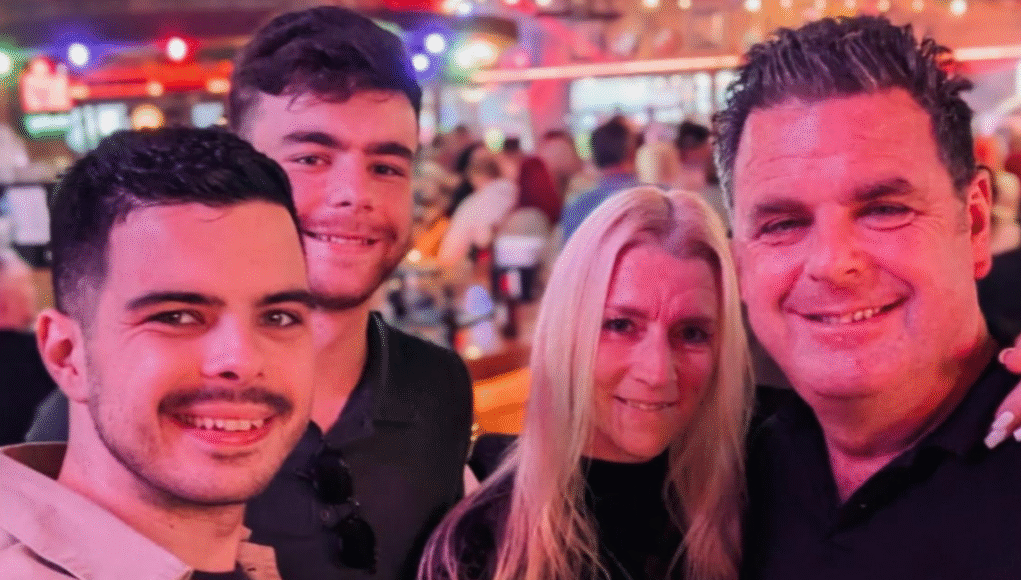
A Wiltshire RAF veteran who faced a life-altering cancer diagnosis has spoken out in support of a world-first clinical breakthrough that could revolutionise the treatment of anal cancer.
Sam Panter, 48, was living in Swindon and working at the Great Western Hospital when she was diagnosed with anal cancer in 2019. Initially mistaking her symptoms for haemorrhoids, Sam’s persistence in seeking answers eventually led to a diagnosis that came as a complete shock.
Now based in Spain, Sam has shared her journey following the publication of findings from the PLATO ACT4 trial — a pioneering study funded by Cancer Research UK through Stand Up To Cancer, which could change how anal cancer is treated globally.

“I genuinely never thought it would be cancer,” said Sam. “After the heartbreak of telling my family, I knew I just had to get on with it. I was lucky it was caught early, and I had the support to take action.”
Sam received treatment at Churchill Hospital in Oxford and was among 163 participants in the PLATO ACT4 clinical trial — a study that explored whether a shorter, lower dose of radiotherapy could be just as effective as the standard five-and-a-half-week treatment.
The results, presented at the prestigious ESTRO 2025 conference in Vienna, showed the new approach not only matches the effectiveness of traditional treatment but also reduces the distressing side effects — including skin blistering, severe fatigue, and long-term complications such as incontinence and sexual dysfunction.
Sam’s treatment, although using the standard dose, placed her firmly in the group who made this discovery possible. “The side effects were tough,” she admitted. “At one point I wondered if I could keep going. But knowing what we’ve learned from this trial, it makes all that discomfort worthwhile.”
Her experience included daily travel from Swindon to Oxford — a journey that became increasingly draining as the treatment progressed. Still, Sam endured the full course, and in December 2024, five years on, was officially declared cancer-free.
PLATO, led by Professor David Sebag-Montefiore at the University of Leeds, involved three individual studies (ACT3, ACT4, and ACT5). The ACT4 trial focused specifically on early-stage anal cancer and whether a reduced radiation dose over four and a half weeks could still deliver successful outcomes. The answer, it appears, is a resounding yes.
“The trial’s results are a breakthrough,” said Professor Sebag-Montefiore. “Patients like Sam have helped demonstrate that personalising treatment not only works but also significantly reduces the toll on patients’ lives.”
The shorter treatment proved to be just as effective: 88 out of 100 patients remained cancer-free three years after treatment with the lower dose, compared to 84 out of 100 with the standard approach. Moreover, patients reported fewer short and long-term side effects, improving their quality of life.
Dr Alexandra Gilbert, another key figure in the trial, noted improvements in sexual function and mental wellbeing for patients on the reduced plan. This, combined with fewer hospital visits, positions the findings as a transformative shift for both patients and health systems alike.
Sam said she was proud to have taken part: “When I was asked to join the trial, I took a leap of faith. Research like this is essential. It’s given me — and hopefully thousands more — the chance of a better future.”
Cancer Research UK’s Dr Iain Foulkes hailed the results as a “practice-changing trial” likely to influence treatment protocols worldwide. For Sam and her family, it represents not just personal survival, but a legacy that may improve outcomes for countless others.