In Stroke Awareness month the spotlight is rightly put on work to prevent strokes, and to support stroke survivors as they rebuild their life.
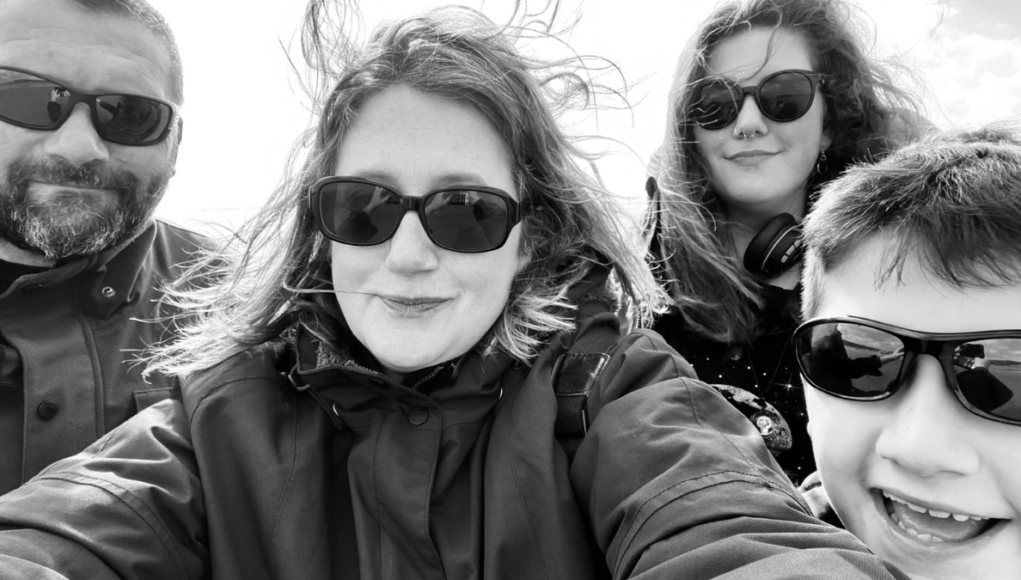
The story less told, though, is the one about the survivor’s family whose lives are changed in a heartbeat. Stroke Association is Barratt Homes Bristol’s Charity of the Year and, during May, which is Stroke Awareness Month, their sales director Andrea Pilgrim went to meet Haley Mitchell to find out what happened when her husband Dean experienced a stroke in his early 50s – and why she’s now working to help other families like hers.
For a lot of people it comes out of the blue, Hayley told me. Like a terrible accident. At the end of 2021, Dean, just 52 then, had gone to the GP for a blood test and Hayley was dropping something off at their kids’ school before swinging back to pick him up.

“I saw him sitting on a bench and knew something was wrong. There was something about him,” Hayley remembers. “Twenty minutes later he was in an ambulance on the way to hospital – he was there for two weeks before being transferred to rehab for another fortnight.
“It was devastating,” says Hayley. “Dean had a job that took him across Europe, and we had two children – 10 and 15 then – at school. I had no idea in those first weeks whether he’d be able to go back to work or drive or look after himself. Or how I’d be able to care for him and the children and carry on working myself. Of course you do make those things happen. You are so busy you don’t really think about it.”
What I didn’t realise – what Hayley says a lot of people don’t realise – is what stroke recovery involves, and the very different journey survivors like Dean go on, which can take not just weeks or months but years after hospital discharge. How the Stroke Association in their mission ‘to rebuild lives’ after stroke is not only supporting the survivor, but the family around them who benefit from the charity’s advice on everything from finance to family relationships.
“I think more people today know what a stroke is, but very few people understand about what comes next – or about stroke’s impact,” says Hayley. For Hayley ‘next’ was moving house to a home that was more accessible and juggling her work while caring for Dean and the children. She actually took on a new job with the Stroke Association’s Stroke Recovery Service in Wiltshire as a result of her experience. It supports stroke survivors and their families and carers.
“I think people outside the family see someone struggling with balance or mobility or their speech (the effects of a stroke depend on where it takes place in the brain) but don’t understand the hidden effects of stroke –that can include things like behavioural changes, fatigue or memory problems,” explains Hayley. “People see the physical improvement – when Dean went back to work after six months, mostly working from home, he sounded like his old self – but don’t understand it’s not over,” she says. “And they don’t understand the impact it can have on children, or on other relationships. But, of course, this is about the brain so everything is affected. There is a lot to unpack in the months and years after. Depression often comes with it and is complicated, because it’s wrapped up in the shock and the grief and the fear of what is next.”
“Stroke Association do understand all this, though,” says Hayley. “And I have learned so much about how lost families can feel, and what they might need. I’ve realised how much we didn’t know when it happened to us.”
And what do people need? Hayley says alongside the practical stuff – invaluable, life saving support at the end of the phone or delivered through a visit via teams like hers – is understanding from the people around a family.
“People always, and kindly, ask how the stroke survivor is doing. But they might not see a stroke survivor’s partner or parents slowly burning out. Or not think to ask how the children are doing. That can be really tough on kids, and on their life at school. Many families find schools don’t make allowances – even after they’ve explained what is going on at home. They might still get detentions for forgetting something. Still be told off for not focusing. But their whole life can be changed by stroke. Our whole life changed and, while I feel good about how we’re doing now, I want to be honest about that to help others going through this.”
Stroke Association is Barratt Homes Bristol’s Charity of the Year. The work they do covers specialist support for stroke survivors, groundbreaking research, and campaigning to raise awareness of the risks of stroke and how to prevent one. And they also finance specialist services to support families like Dean and Hayley’s. You can find out more at stroke.org.uk which also signposts ways to support their fundraising during this special awareness month.