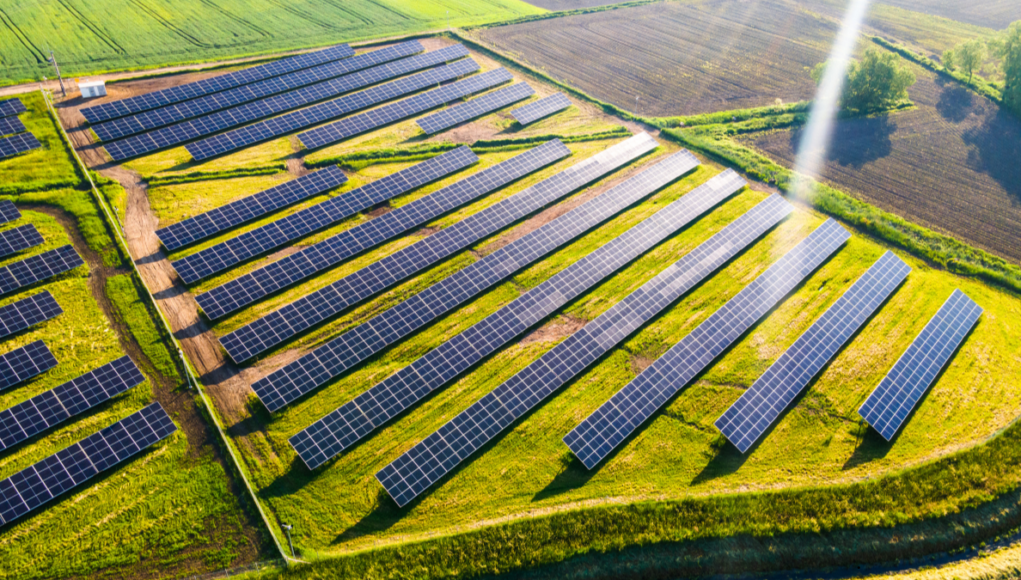
Plans to build extensive ground-mounted solar power plants across thousands of acres of fertile farmland have raised significant concerns about the UK’s food security, national security, and future legacy. The UK Solar Alliance (UKSA) has voiced strong objections to these plans, many of which are driven by foreign-funded developers, and is calling for urgent scrutiny and action.
Dr Catherine Judkins, Chair of the UKSA, highlighted the hidden risks in the rush to embrace solar energy. “We know we need to embrace solar as part of our green energy push but critical risks are being overlooked in the rush to hit targets. It does not have to be this way. Instead of taking farmland out of production, we can introduce solar energy in much smarter ways – at better sites, at the right scale and, importantly, with proper scrutiny of developers driving the current ‘sunrush’. Our neighbours in Europe are already ahead of us with solar on rooftops and car parks – much of it mandated.”
The UKSA is demanding an urgent inquiry into the rapid rollout of ground-mounted solar installations on farmland and greenbelt areas. Representing local community groups across the nation, the Alliance poses crucial questions as the UK reaches a tipping point in what has been dubbed Net Zero’s developer-driven ‘sunrush’.

Dr Judkins stressed, “We urge the next government to rethink the rollout of ground-mounted solar power. There are crucial question marks hanging over this enormous pipeline of schemes. Many of them are on an overwhelming scale – one ‘mega’ plan targets a massive 6,920 acres, the equivalent of nearly seven Clarkson’s Farms.
The UK’s food security and farming industry will be in jeopardy if field after field converts to power generation. We are at risk of rushing into questionable energy security at the expense of food security.
There are potential threats to national security if proper investment screening is not conducted on the foreign funding behind many ground-mounted solar schemes – we could be allowing too much foreign financial control of UK energy.
And we are risking a colossal commitment to mass-scale solar schemes that are already becoming obsolete as we see innovative new solar concepts coming to market.
This potentially leaves a legacy of thousands of acres of redundant solar panels in ‘rustbelts’ that will need to be dismantled and disposed of in the decades to come. Developers do not include the carbon costs of disposal in their sales pitches. There is no developed industry for panel recycling at scale and there is still no plan to deal with thousands of tonnes of panel waste.”
In the race to reach Net Zero, the UKSA is raising alarms about:
- Food Security: Switching fertile farmland to power production puts greater pressure on the nation’s food security and future farming industry. The UK already imports 40% of its food. If we fail to protect our good farmland now, we will be forced to import even more of what we eat in future. Ground-mounted solar needlessly industrialises huge swathes of good grade agricultural land – and the government is not monitoring, let alone regulating, this irreversible loss of land. Why are we prioritising energy security over food security?
- National Security: Making sure the UK has renewable energy cannot come at the cost of handing real power overseas. The significant level of foreign investment flowing into the UK renewables infrastructure raises critical questions about its provenance. Some investment is sourced from countries with questionable human rights credentials. Some is from organisations motivated purely by short-term profit – most notably, the overseas group widely alleged to have pushed one of Britain’s leading water utilities to the brink of bankruptcy. We need to be clear on which countries are funding our future energy. In this developer-driven ‘sunrush’, what checks are being made by government – or legal scrutiny under the new laws on national security and investment – to ensure investment is not made by sanctioned investment or investors? What is being done to ensure the right balance between overseas control and UK autonomy?
- Site Selection: Solar power has the advantage of versatility but is now being targeted at the wrong sites. The UK has plenty of capacity for solar panels on brownfield land, infrastructure corridors, domestic and commercial rooftops and car parks. CPRE analysis shows that if we only used a quarter of our 617,000 acres of south-facing commercial roofspace for solar, we could generate over 25GW – almost half the 70GW target. Why are we not following the example of countries like Germany and France which have successfully harnessed rooftop solar, or Italy, which has banned large-scale solar development on agricultural land?
Dr Judkins added, “We welcome the switch to renewable energy, but are concerned by evidence of the risks associated with the uncontrolled spread of ground-mounted solar across the UK. We must not let yesterday’s tech be installed at the expense of tomorrow’s food. Nor can we allow a key component of our emerging renewables infrastructure to be hostage to opportunistic overseas control.
We need to bring communities with us on the road to Net Zero. Solar can still be rolled out at pace, but through a transparent and accountable democratic process, community collaboration and support for the ‘right’ solar.
The Alliance calls on decision-makers to recognise now that there are better alternatives and that a safer, more future-proof infrastructure is within reach. With more clarity, meaningful consultation with communities, careful policy implementation, monitoring and regulation, we could see high-quality solar schemes as part of the renewables mix, in the right places and at the right scale.”