Swindon residents are being urged to think twice before putting rubbish in their general waste bins, with food waste still making up a significant proportion of recyclable material being thrown away.
The warning comes during Recycle Week, which runs from 14 to 20 September, as Swindon Borough Council highlights the amount of waste collected from households across the borough and the potential savings from recycling more of it.
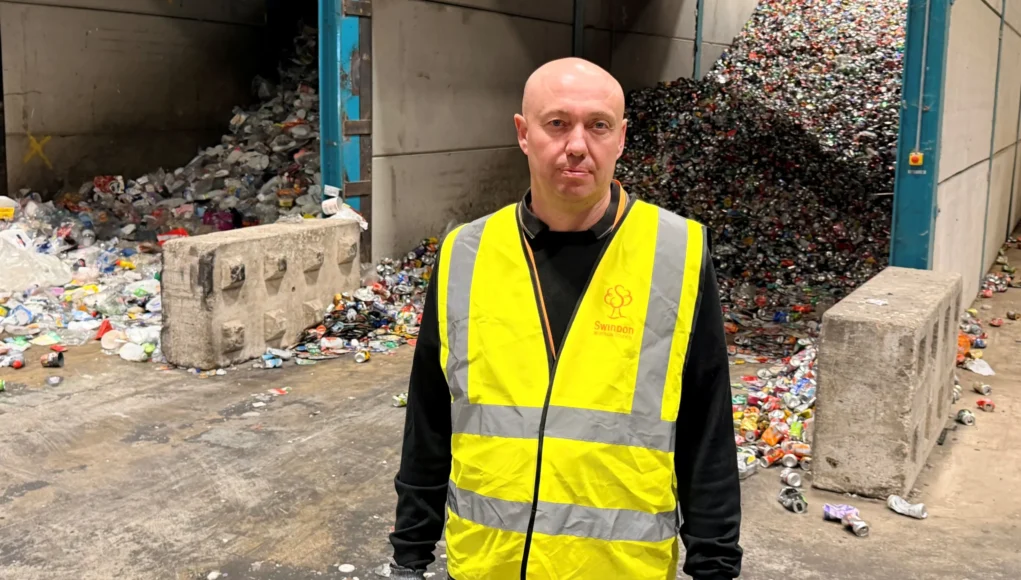
Councillor Kevin Parry, the Council’s Cabinet Member for Recycling and Streetscene, visited Swindon’s Household Waste and Recycling Centre during the week to see what happens to waste and recycling after it is collected from residents’ homes.

The Council collects food waste and recycling from more than 100,000 homes and communal properties every week.
Over the past year, more than 52,000 tonnes of recycling was collected across Swindon, while a further 4,900 tonnes of food waste was sent to Codford Biogas near Salisbury.
The food waste is processed into renewable biogas and nutrient-rich fertiliser for farmland.
However, the Council says recyclable materials are still regularly being put into general waste bins.
During Recycle Week, examples of recyclable items found in general waste were shown to Cllr Parry. Previous analysis of household waste in Swindon found that food waste alone accounts for more than a quarter of recyclable material found in wheelie bins.
Getting more waste into the correct recycling stream could also reduce the cost of disposal. The Council says every tonne of waste recycled saves more than £150 in disposal costs, amounting to around £1 million a year.
Cllr Parry said: “Residents do a fantastic job recycling and I’m grateful for the efforts people already make.
“But during my visit I was reminded that too many recyclable items are still ending up in rubbish bins, particularly food waste.”
He said recycling could both reduce waste and help the Council manage its spending.
“At a time when councils are under pressure to deliver value for taxpayers, it makes sense to recycle as much as possible,” he said.
“Every tonne recycled instead of thrown away saves more than £150 in disposal costs, money that can be invested in local services.”
The visit also highlighted the range of material being taken directly to the Household Waste and Recycling Centre, including electrical goods and furniture as well as less obvious items such as musical instruments and fishing equipment.
Where suitable items can be reused, they may be sold through the centre’s regular auctions rather than being disposed of as waste.
Residents are also being reminded that recyclable items should be placed loose in recycling containers rather than inside bags, as bagged recycling can cause problems during the sorting process and prevent materials from being recycled.
Cllr Parry’s advice is simple: “If you’re not sure which bin something belongs in, check before you chuck.”
Residents can use Swindon Borough Council’s online Waste Wizard to check how and where different types of waste can be recycled.