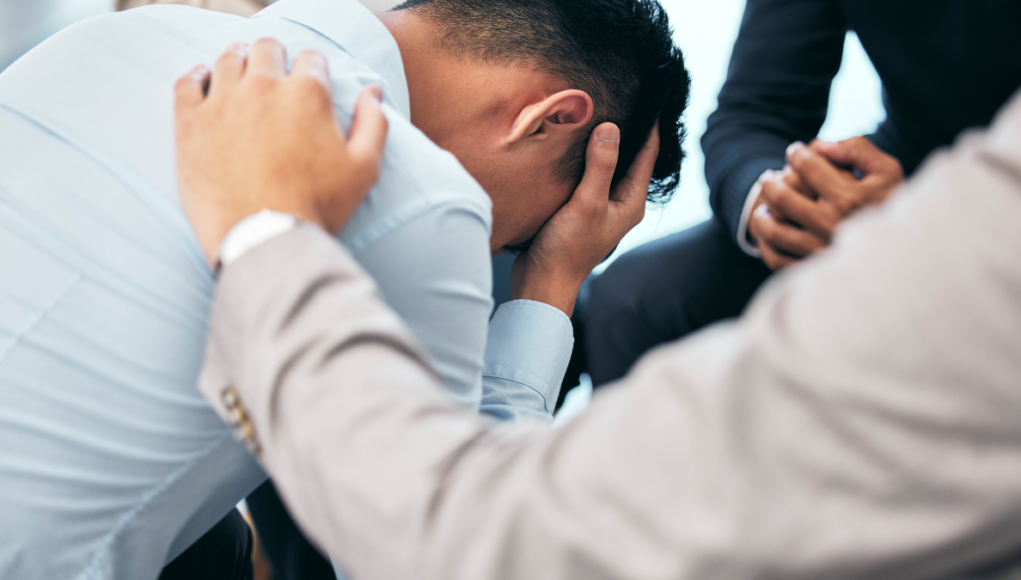
A recent study has unveiled an intriguing trend among men seeking support for their mental health struggles: one in four men now prefer reaching out to online communities rather than confiding in their friends.
The anonymity provided by these online platforms offers solace and helps alleviate feelings of isolation, with three in 10 men affirming that online communities have played a significant role in their mental well-being.
This finding is reinforced by data from Reddit, which highlights a substantial increase in online communities dedicated to men’s mental health. Over the past five years, subscribers to these communities have skyrocketed by an astonishing 571%.

Additionally, the number of daily posts seeking help and advice has surged from an average of three per day in 2019 to nearly 10 per day in 2023.
Google search trends also shed light on this phenomenon, with searches related to men’s mental health experiencing a staggering 1468% increase over the past decade. Notably, searches for steroids have risen by 51%, suggesting a complex interplay between mental health concerns and body image issues.
The research was conducted by Better, the UK’s leading leisure operator, as part of a comprehensive exploration into gym culture, mental health, and the unrealistic body expectations that men face. The study involved surveying 2,032 men, revealing noteworthy insights into the connection between exercise, social media, and mental well-being.
Key findings from the study include:
- A quarter of men believe that engaging in sports or exercising helps them channel and alleviate feelings of aggression.
- Men expressed a strong desire to be described as “caring” (43%) and “loving” (33%).
- Approximately one in 10 men admitted to considering the use of steroids due to social media pressures. This figure rises to 15% among those aged 16-24 and 18% among the 25-34 age group.
- Social media influences body image concerns, with one in five young men considering surgery as a result of the influence of platforms like Instagram and Facebook.
Furthermore, the study found that social media has a significant impact on men’s body confidence, with two-thirds stating that it affects them in some way. Nearly half of the respondents expressed openness to undergoing some form of body modification. Shockingly, 12% attributed this desire directly to social media, and the figure rose to 19% among individuals aged 19-24.
Moreover, the study highlighted that participating in sports or exercise has a positive impact on men’s mental health. An overwhelming 97% of men agreed that physical activity benefited their mental well-being, reducing stress levels, easing anxiety and depression, and boosting self-confidence.
Interestingly, a quarter of men disclosed that they turn to online communities rather than their friends when grappling with mental health issues. Among these individuals, 29% acknowledged that these online communities have been instrumental in improving their mental well-being. This trend was particularly prominent among 25-34-year-olds, with four in 10 men within this age bracket seeking support from online communities.
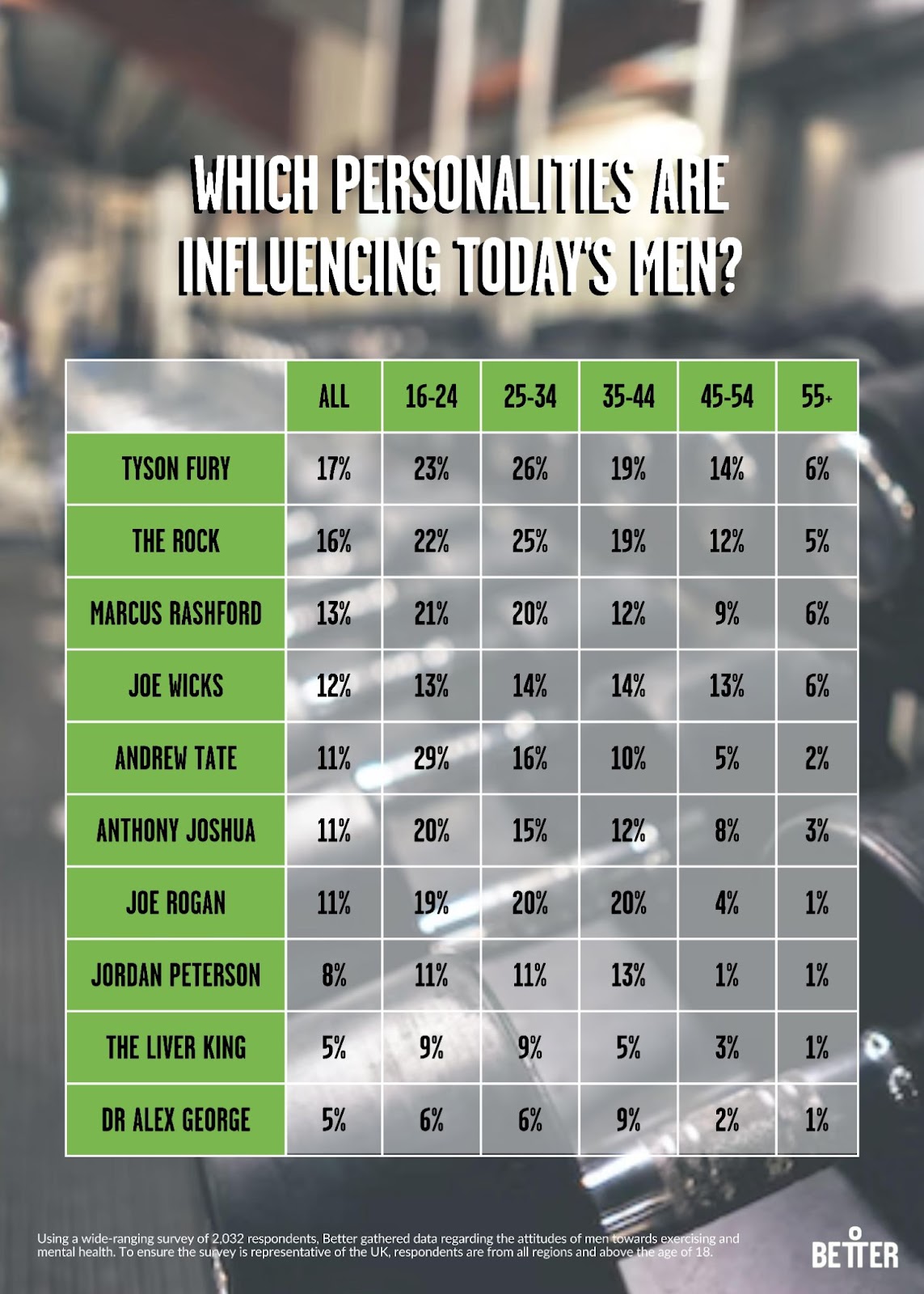
Social media influencers also exert a notable influence on men’s attitudes and behaviors. Among men aged 16-24, Andrew Tate emerged as the most influential figure, with 29% acknowledging his impact. Tyson Fury ranked as the most popular influencer overall, with nearly a fifth of men reporting his influence. Dwayne “The Rock” Johnson secured second place, particularly among men aged 25-34.
In terms of checking in on friends’ mental health, men believe they are more proactive than their friends in initiating these conversations. While 45% of men stated that they regularly check in with their friends, only 38% indicated that their friends reciprocate this gesture. Interestingly, men participating in team sports demonstrated a higher inclination to inquire about their friends’ mental well-being compared to those exercising alone.
This study by Better provides valuable insights into the complex relationship between fitness, social media, and mental health among men. By acknowledging the growing reliance on online communities, promoting open conversations about mental well-being, and cultivating positive influences, we can strive for improved mental health outcomes for men in society.