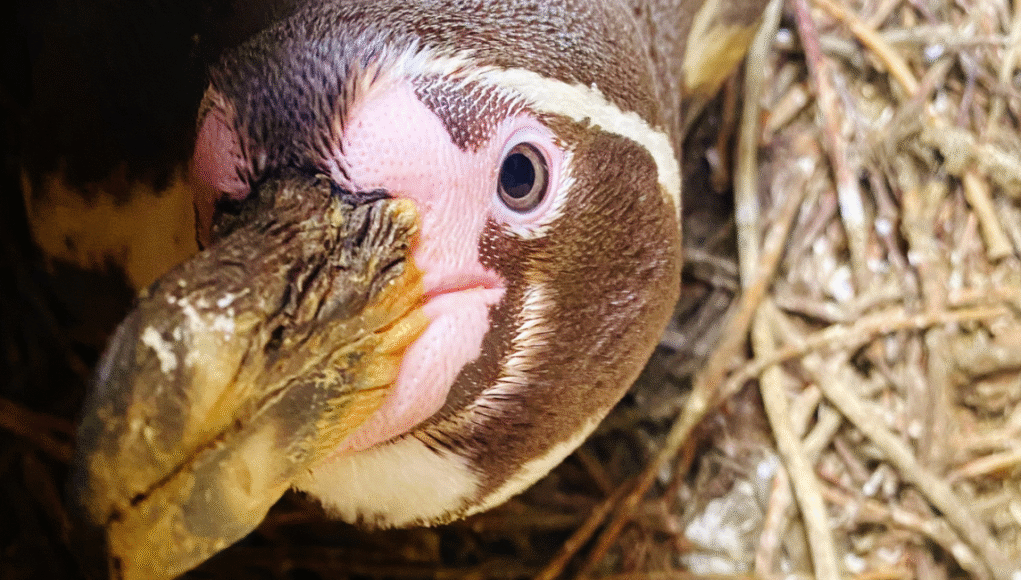
There’s something special in the air at Birdland in Bourton-on-the-Water – and it’s not just the smell of fresh fish. The park is currently celebrating its most successful Humboldt penguin breeding season in nearly a decade, with four chicks already hatched, a fifth breaking through, and a sixth egg still under watchful incubation.
This year marks a turning point for the attraction’s popular Penguin Shore exhibit, with all three of its established breeding pairs – Pablo and Sunny, Broady and Kat, and Big Mac and Cookie – becoming parents for the very first time.
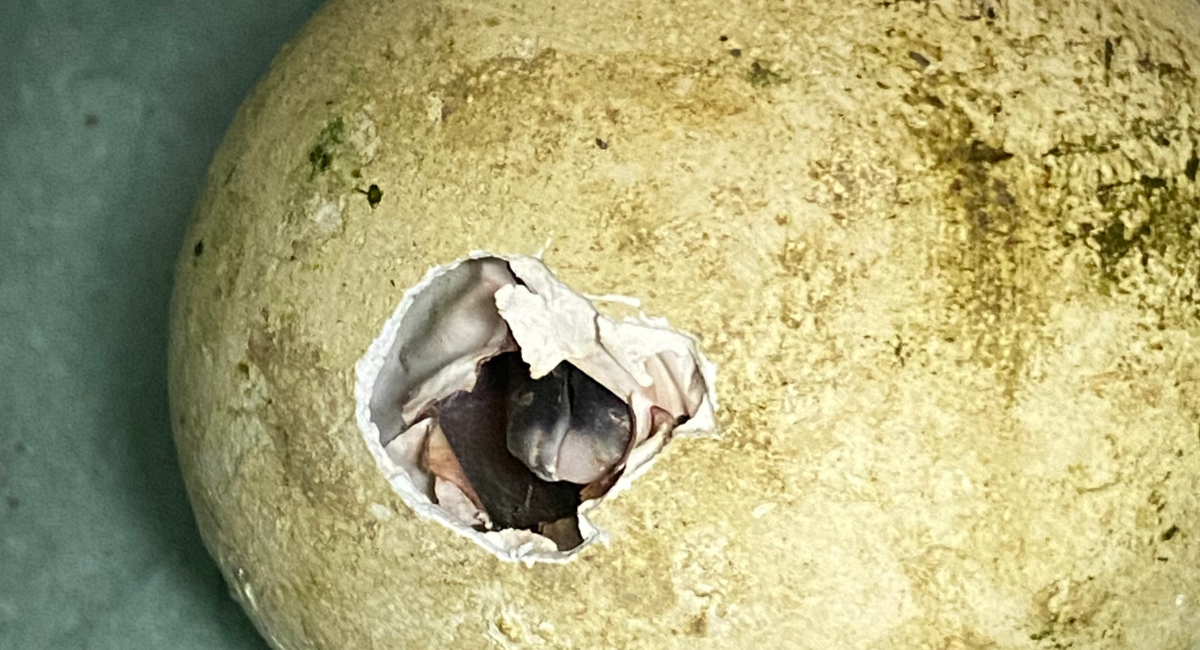

Each pair laid two eggs, a remarkable total and the largest clutch recorded at Birdland since 2017. In a move shaped by previous experiences, keepers opted to remove one egg from each nest for artificial incubation, giving the adults breathing space and the chicks a stronger chance of survival.
Big Mac and Cookie welcomed their chick on 26th May, tipping the scales at just 61 grams – one of the smallest in the park’s history. Eleven days on, the little one is thriving, now weighing 298 grams, although the pair’s second egg was sadly infertile.
Broady and Kat have shown promising parenting instincts, successfully raising one chick themselves – now 26 days old and weighing in at a sturdy 1.7 kilograms. Their second chick is being hand-reared and is doing equally well, growing steadily at 24 days old and moving from formula to solids.
Meanwhile, Pablo and Sunny experienced mixed fortunes. Although their nest-reared chick did not survive, their second – hatched under incubation at 91 grams – is thriving at 42 days old and already weighs 1.8 kilograms. It now feeds entirely on solids, with two hearty meals each day.
Hand-reared chicks are nurtured with a bespoke diet of fish, squid, vitamins, and salt paste, all carefully measured and adjusted to support healthy growth.
Humboldt penguins are listed as vulnerable in the wild due to a mix of environmental threats including habitat loss, climate change, overfishing, and pollution. Birdland continues to play a role in the species’ survival, supporting global conservation projects such as a census in Peru alongside Penguins International. A member of the Birdland team is even set to join fieldwork later this year.
All of the new chicks are part of the EAZA Ex-situ Programme (EEP), contributing to the wider European conservation network that’s focused on protecting endangered species in human care and, ultimately, in the wild.
Visitors hoping to spot the fluffy new arrivals will need patience, as the chicks remain behind the scenes for now – but their tiny waddles mark a huge step forward for Birdland and penguin conservation as a whole.