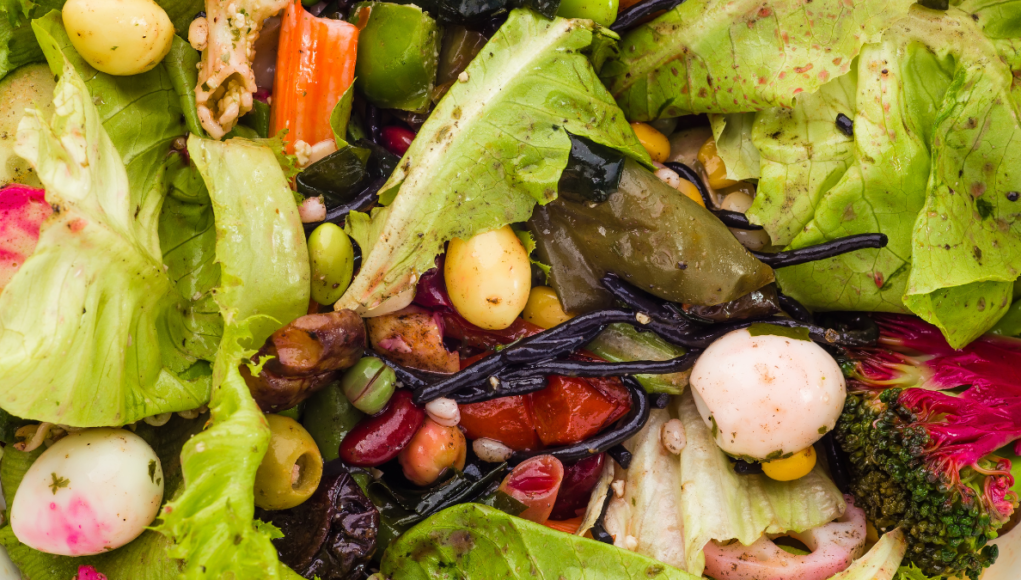
Residents in Swindon are being encouraged to take practical steps to reduce food waste during National Food Waste Action Week (18 to 24 March) by Swindon Borough Council, potentially saving money and contributing to environmental sustainability efforts.
Every year in the UK, seven million tonnes of edible food is discarded in households, amounting to a staggering £17 billion in wasted food. On average, each person discards around 70kg of food annually, costing households approximately £600 per year.
To combat this issue, creating a weekly meal plan can be an effective strategy to reduce unnecessary food purchases, ultimately saving time, effort, and money. Valuable advice on crafting easy and adaptable meal plans is readily available from the national Love Food Hate Waste website.

Additionally, supermarkets are increasingly offering more loose fresh fruits and vegetables, facilitating the purchase of only what is needed. Research indicates that transitioning to selling loose apples, bananas, and potatoes could potentially save 60,000 tonnes of food waste and reduce plastic packaging by 8,800 tonnes annually.
Potatoes rank as the top wasted item in UK households, with a staggering 510,000 tonnes wasted each year, equivalent to about 2.9 million whole potatoes discarded daily. Updated guidance from the Food Standards Agency now recommends storing potatoes in the fridge rather than a cupboard to prolong freshness, following extensive research.
Residents are also encouraged to explore freezer-friendly options such as cooked rice, eggs, cheese (particularly when grated), fruits, vegetables, herbs, and baked goods, providing additional time to consume these items before they spoil.
Adjusting fridge temperatures to between 0 and 5 degrees Celsius can extend the freshness of perishable items by up to three days compared to the average temperature of 7 degrees Celsius. Utilising tools available on the Love Food Hate Waste website, residents can obtain tailored instructions for their specific fridge brand.
Portion control plays a crucial role in reducing food waste, with approximately a quarter of wasted food attributed to cooking excess amounts. The Love Food Hate Waste website offers a portion calculator to assist residents in determining appropriate serving sizes.
Lastly, residents are encouraged to explore flexible meal options to utilise leftover ingredients creatively, minimizing waste. For unavoidable food waste, households can utilize the weekly food waste collection service, which has already recycled over 1,275 tonnes of food waste since its launch in late November.
Councillor Watts, Cabinet Member for the Environment and Transport, said: “With food costs still high, it’s in all our interests to consider ways to save money by reducing the amount of food we throw away
“Food Waste Action Week is the perfect opportunity to highlight the practical ways that residents can reduce the cost of wasted food. The national Love Food Hate Waste website is packed with tips and ideas. If we all stopped wasting food which could have been eaten, it would have the same CO2 impact as taking one in four cars off UK roads.
“Where waste does have to be thrown away, residents are able to use the weekly food waste collection service. Everyone’s efforts have helped recycle over 1,275 tonnes of food waste since late November.”