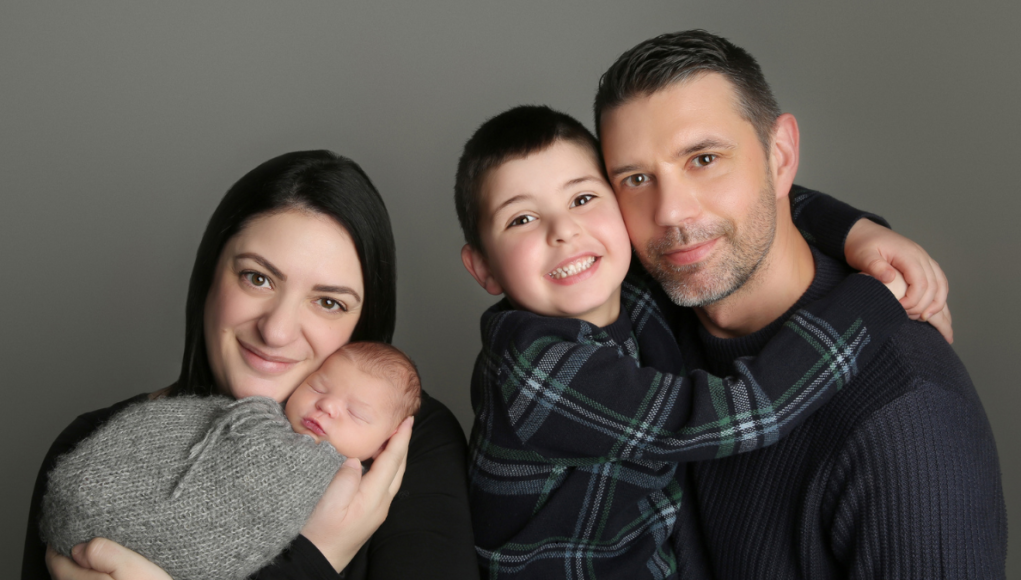
In an age where balancing professional responsibilities and personal aspirations can be a daunting challenge, the story of Susie Lewinska stands out as a beacon of hope to want-to-be-parents who are struggling to conceive.
As more individuals and couples turn to fertility treatments like IVF, the role of workplace support becomes increasingly crucial. Susie’s experience highlights how understanding and flexibility from employers can make a profound difference in navigating the complex and emotional journey of fertility treatment. Her path to parenthood, marked by the support of the UK Space Agency, is a testament to the positive impact that a compassionate workplace can have on personal well-being and success.
When Susie Lewinska realised her journey to parenthood would involve IVF, she was understandably concerned about the impact on her work and how supportive her company would be. Holding down senior roles, Susie’s apprehensions were eased when she joined the UK Space Agency, where she found an open and supportive environment for her fertility treatment.

Susie, 39, married Paul in 2013, and they soon decided to start a family. With a Lebanese-Polish heritage, family holds great significance for Susie. However, having polycystic ovary syndrome (PCOS) and no regular periods, she knew conception would be challenging. Routine testing also revealed Paul had a fluctuating sperm count, further complicating their journey.
In 2014, the couple were referred for three rounds of IVF on the NHS, which they opted to undertake at TFP Fertility Oxford, while utilising the satellite clinic in Swindon for blood tests and scans. “The staff at Swindon were great,” Susie recalls.
Following a couple of failed transfers and a miscarriage, Susie and Paul participated in a genetic screening study at the clinic. The embryologist discovered two mosaic embryos – a higher risk for miscarriage but with the potential to repair themselves. Only one genetically normal embryo remained, although it was an odd shape. “It didn’t look the best, but it became my wonderful baby boy, Eliasz,” says Susie. Eliasz was born in April 2017.
Balancing a demanding job in a government department with IVF appointments took a toll on Susie. In 2021, seeking a change, she joined the UK Space Agency in a senior role. To her relief, the agency had an IVF policy and guides for both managers and employees. “They even have a guide for managers about what not to say, such as, ‘maybe it wasn’t meant to be’,” Susie explains. “After that, I told my director straight away.”
Feeling comfortable with the organisation’s support, Susie was able to take the necessary time for appointments. “Everyone gave me the space to take all the appointments I needed, and I made sure someone was there to deputise for me in case I had to take any unplanned time off.”
Susie returned to TFP Fertility Oxford for another IVF round. “By this time, the team at the Swindon office knew me well. They’ve been there for me in the hardest times,” she says. The clinical team suggested using progesterone to increase the success rate of implantation and early growth of the embryo. This round resulted in four healthy embryos, and the additional progesterone helped Susie carry the pregnancy to term, leading to the birth of Emilia in February 2022.
Approaching her 40th birthday in 2024, Susie is pregnant again, expecting in September through a frozen transfer of one of the remaining healthy embryos. “If you had said to me nine years ago that I’d have two children and one on the way, I wouldn’t have believed you!” she says. “With this final pregnancy, I feel happy with my family and can move on. We’ve just had the first-trimester scan, and it is incredible. We’ve got there three times!”
Susie emphasises the importance of workplace support during IVF. “Knowing my work were understanding around my IVF appointments and allowing flexibility really helped me through an already stressful time.”