Street harassment is on the rise and that is partly down to our culture of acceptance and tolerance of it. Crimes and harmful behaviours such as public sexual harassment and hate crime (including disability hate crime) are significantly under-reported.
A key factor for this is the everyday nature of these crimes and incidents and the fact that they are deeply ingrained in our culture.
Street harassment can include many unwanted behaviours such as unwanted sexual attention, intimidatingly sitting or standing right by someone, verbal abuse, refusing to end an unwanted conversation which is aggressive or intimidating, pressing against someone, the list goes on.

Often incidents are not isolated, Emily Atack – the actress who played schoolgirl Charlotte Hinchliffe in comedy series, The Inbetweeners – opening up and saying she is abused every day by the same man.
In the new BBC2 film, Emily Atack: Sexual Harrassment & Me, Emily attempts to understand why she is sexually harassed online daily.
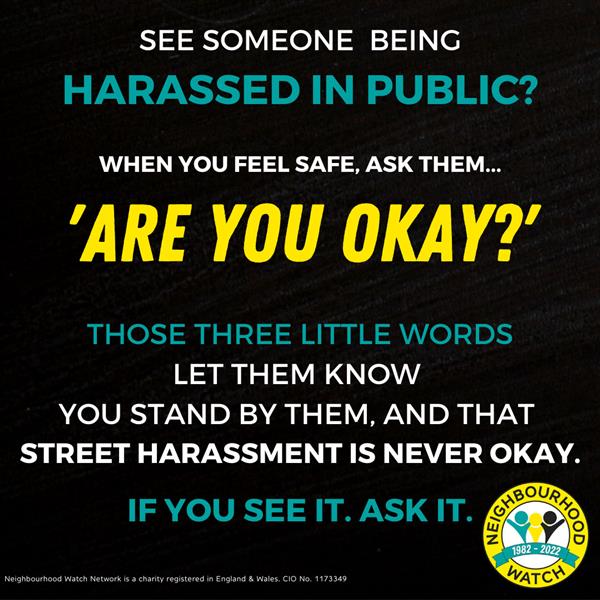
Today marks the start of a new campaign by Neighbourhood Watch to target bystanders – those who witness street harassment – to encourage them to ask the victim if they are okay when they feel safe doing so.
A Neighbourhood Watch spokesperson said ‘witnessing street harassment and not safely intervening sends the message to those experiencing it that it’s okay and society normalises it.
‘Ongoing acceptance of street harassment contributes to a toxic culture. We want to change this, but we need your help.’
The 5Ds of Bystander Intervention
The 5Ds methodology by Right To Be is an expert-approved set of tools to help you safely intervene when you witness street harassment. Remember, the first rule is to prioritise your personal safety. Do not challenge harassers if they are threatening or you believe they may cause harm to you or the victim if you do so. Which approach(es) you use will depend on the situation:
Delay – Comfort the harassed person after the incident and acknowledge that the behaviour was wrong. Be a friend.
Distract – Pretend to be a friend, ask for the time, cause a distraction, and be creative
Delegate – Find someone in a position of authority (e.g. shop security, bartender or a bus driver) and ask them to intervene.
Direct – Speak up, call the harasser out, and then turn your attention to the person being harassed. If they respond, ignore them; don’t escalate. Only use his method as a last resort to prevent violence. Your safety and that of the person being harassed come first
Document – Watch and witness, write down or film the harassment, provide the footage to the victim and never post it online or use it without their permission.
If you see someone experience street harassment, ask them if they are okay. This lets them know you stand by them, and that street harassment is never okay. If you see it. Ask it.