England’s weather has a remarkable way of shaping the natural world, and this year, it’s laying the groundwork for an exceptional autumn spectacle, according to experts from Forestry England.
The refreshing spring, characterised by abundant rainfall and lower-than-average sunshine, followed by a record-breaking June with above-average sunshine, has set the stage for a breathtaking show of autumn colours.


Data from the Met Office reveals that England experienced a wet spring, with rainfall exceeding the UK’s average by 55% in March. This marked it as provisionally the 6th wettest March since records began in 1836. While the persistent rain may have seemed like a damper on the season, it has, in fact, prepared the soil for a vibrant autumn display. The ample moisture in the soil has fostered robust and healthy growth in trees, an essential precursor to a stunning show of colourful leaves.
The lower-than-average sunshine during March might have initially suggested a subdued autumn palette. However, Forestry England anticipates a unique twist in this year’s autumn transformation.
The reduced sunlight during early spring influenced the process of photosynthesis, but subsequent sunny spells have provided ample opportunity for the nation’s forests to accumulate sugars. These sugars are responsible for the rich reds, golds, and oranges that grace the autumn landscape as they are reabsorbed into the trees. Instead of following the usual pattern, this year’s weather could lead to a more gradual and enchanting shift in leaf colours, creating a truly one-of-a-kind blend.
The unusually warm start to September could also influence when we witness the autumn colours. High temperatures can delay the onset of autumn and the subsequent change in leaf colours. Typically, the transformation occurs as the days grow shorter, and evening temperatures cool. The green chlorophyll in the leaves begins to recede, revealing the vibrant yellow and orange hues. While warm weather may slightly alter the beginning of autumn, it can extend the season, offering more opportunities for nature enthusiasts to witness this splendid transformation.
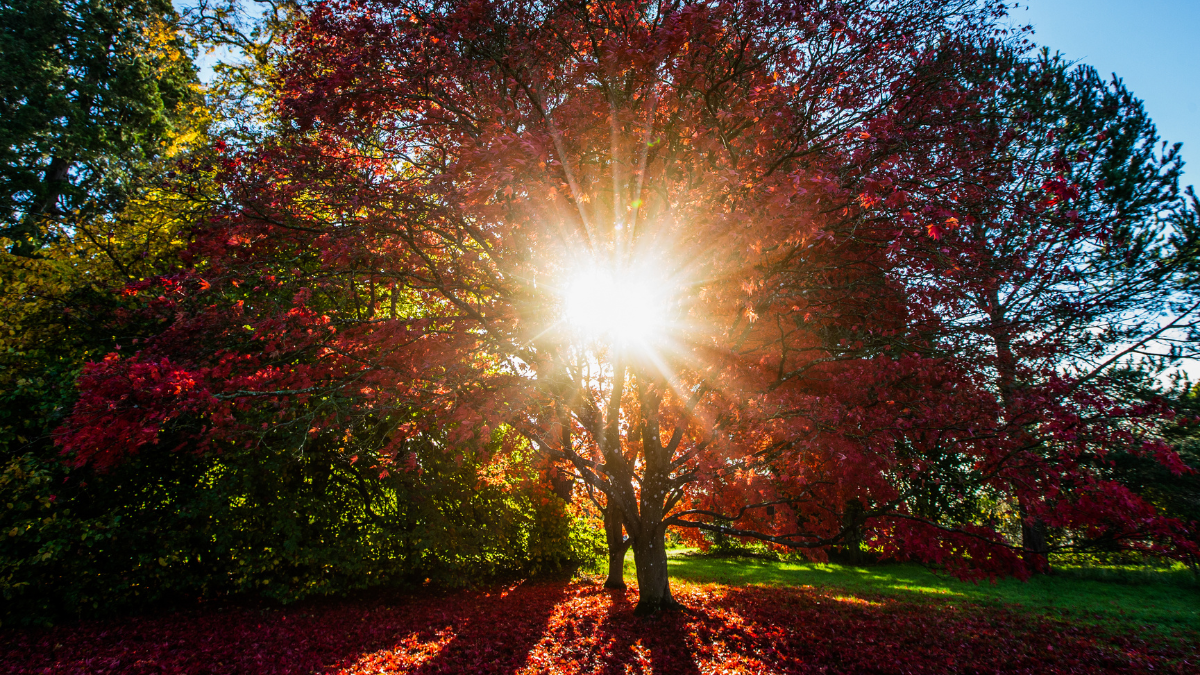
Andrew Smith, Director of Westonbirt Arboretum, shares his fascination with the intricate factors that converge to create autumn’s beauty. “It’s amazing to see how all the different factors come together to create autumn colour every year,” he said.
“While the wet spring and reduced sunshine may bring delightful surprises, other elements also play a significant role. Factors such as genetics, tree species, elevation, and local climate conditions all contribute to the magical spectacle. This combination ensures that the intensity and timing of the autumn colours remain a wonderful mystery every year.”
To bolster the resilience of the nation’s forests against climate challenges, Forestry England is strategically planting a variety of tree species that are well-suited to predicted climate conditions in the coming decades. Among them are sycamore, wild cherry, hornbeam, small-leaved lime, and oak. These trees hold the promise of vibrant autumn displays that visitors can enjoy well into the future, ensuring that England’s autumnal charm remains a perennial wonder.
Forestry England manages and cares for the nation’s 1,500 woods and forests including the 243 hectares (600 acres) at Westonbirt, The National Arboretum.
Westonbirt Arboretum was established in the 1850s by wealthy landowner Robert Holford and later developed by his son George Holford. Unlike many arboretums, Westonbirt is laid out according to aesthetic appeal rather than scientific or geographical criteria.
Photos courtesy of Forestry England/Crown copyright.