Swindon Borough Council has marked the first full year of its flagship Swindon Plan with a review of its progress in tackling inequality, revitalising the town centre and delivering greener living – all under the banner of building a fairer, better, greener Swindon.
Introduced in 2024, the Swindon Plan set out long-term goals and measurable steps for reshaping the town. Now, as Cabinet Members prepare to examine the data from the past year at a meeting on Wednesday (9th July), there’s a clear sense of direction – but also, plenty still to do.
Fairer foundations
The first of the plan’s three missions – to make Swindon fairer – has yielded some noticeable results. Incidents of anti-social behaviour (ASB), a persistent issue in many neighbourhoods, have dropped by over 10 per cent. This exceeds the Council’s target of a three per cent annual reduction, with initiatives such as Community Safety Wardens credited for much of the progress.

Elsewhere, more than 1,900 school children have taken part in supervised tooth-brushing schemes, a move praised for its practical impact on long-term health. And in Park North, a brand-new youth hub named The Base is now supporting upwards of 400 young people each week.
Councillors also pointed to growing community engagement, with the Let’s Talk Swindon campaign being expanded to cover major topics such as housing and employment skills.
A better borough
Efforts to make Swindon better include long-awaited improvements to children’s services and homelessness prevention. Over 80 per cent of children in care now live within 20 miles of the town – a statistic that underlines the Council’s focus on keeping young people closer to their support networks.
Housing has also been a major focus. The opening of a new Homelessness Prevention Centre on Beckhampton Street has provided early intervention and support to those at risk of losing their homes. One significant result: the number of families living in emergency accommodation for over six weeks has fallen to zero.
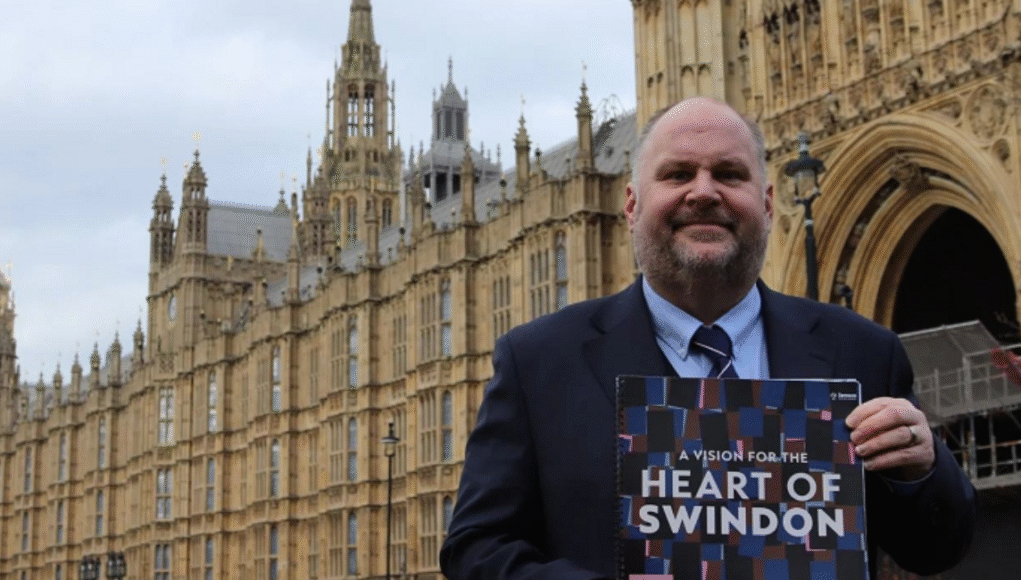
On a broader scale, the Council has made headlines beyond Swindon. Its Heart of Swindon vision – part of its strategy to reinvent the town centre – was recently presented at the House of Lords, with promises of private sector partnerships and a possible new entertainment venue in the works.
Greener goals
The green mission is also underway. Over 400 environmental sensors have been installed in Council-owned homes – more than double the original target – and a programme of retrofitting homes in Park South is due to be rolled out over the next five years. Upgrades include new windows and doors, better roofing, and improved heating systems.
Meanwhile, more than 10,000 trees were planted across the Borough in the 2024/25 season. The Council has also reintroduced its Solar Together scheme, allowing residents to access discounted solar panel installations.
Looking ahead
Swindon Council Leader, Councillor Jim Robbins, reflected on the achievements so far: “This report highlights the real-life impact of our work, from supervised tooth-brushing schemes to reducing families in emergency accommodation. We’ve already achieved a great deal – but we know there’s more to do.”
The next phase of the Swindon Plan will be critical. With funding pressures and public scrutiny on the rise, sustaining momentum and turning short-term wins into lasting change may well be the Council’s biggest challenge yet.