Businesses across the South West are being encouraged to explore how artificial intelligence could help them grow, with new research suggesting greater use of the technology could generate an additional £331 million in revenue across the region.
More than 50 businesses registered for a free AI training event in Bristol on Friday (23 October), where business owners were given the opportunity to learn how the technology could help reduce administrative work, improve marketing and make everyday operations more efficient.
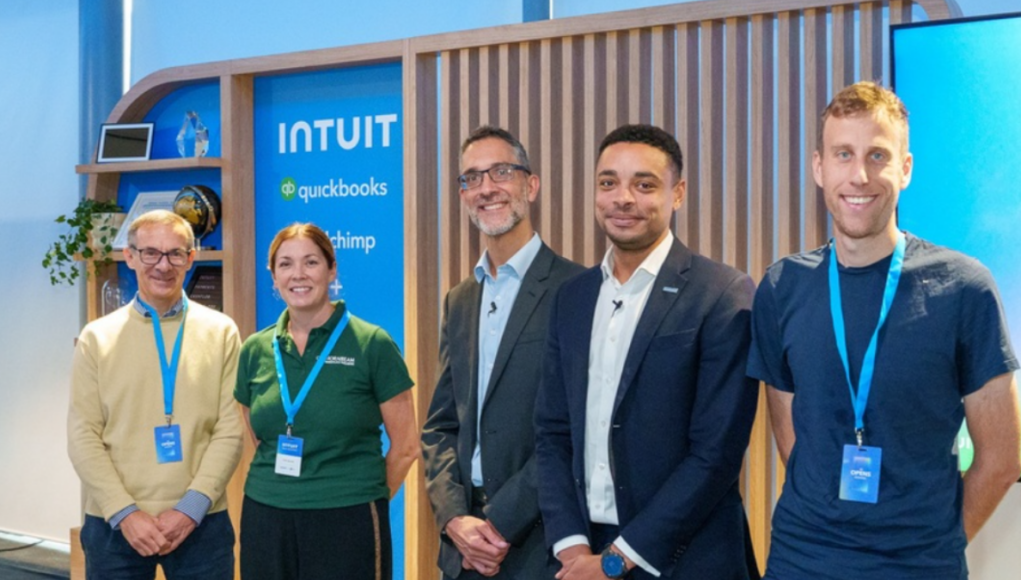
The event, held at We The Curious, formed part of Intuit’s international More with AI Tour and was organised in partnership with the British Chambers of Commerce and Business West.

It comes at a time when businesses across the region are facing continued economic pressures, with figures published by Intuit’s QuickBooks Small Business Index reporting a 1.77 per cent fall in employment, equivalent to around 6,300 jobs.
While AI is often discussed in terms of its potential to replace jobs, the focus of the Bristol event was on helping smaller businesses understand how the technology could support their existing teams and create opportunities for growth.
Could AI unlock millions for South West businesses?
Research published by the Social Market Foundation suggests businesses in the South West could collectively generate an additional £331 million in revenue through greater adoption of artificial intelligence.
For smaller businesses, that could mean anything from spending less time on paperwork to improving customer communications or making better use of existing financial information.
However, knowing where to start remains a challenge for many business owners, particularly those without dedicated technology teams or large budgets.
The half-day workshop offered practical sessions covering marketing, business planning, automation and the responsible use of AI.
Those attending were also introduced to AI-powered features within platforms including QuickBooks and Mailchimp, showing how tools already used by many businesses are incorporating the technology.
The aim was to move beyond discussions about what AI might eventually achieve and instead demonstrate how businesses could begin using it in their daily operations.
Local businesses explore how technology could help them grow
Among those involved in the Bristol event were businesses working in healthcare, workplace wellbeing and housing development.
Tim Hayden, co-founder of the North Somerset-based Bristol Menopause & Wellwoman Clinic, was interested in how AI could help the family-run business reach more women without losing the personal approach that is central to its services.
For smaller healthcare businesses, balancing administrative demands with the time spent supporting patients can be difficult, making improvements to everyday processes particularly valuable.
Cheltenham-based Hornbeam Workplace Wellbeing was also represented at the event.
Its founder, Claire Bennet, was looking at how AI could support the company’s marketing, business planning and future growth.
The business provides specialist workplace mental health training and consultancy, an area where maintaining personal relationships and professional expertise remains important.
Meanwhile, Rober Faulkner of WildHome, a Bristol-based community-focused development organisation, explored how the technology could help improve efficiency and support new approaches to housing and regeneration projects.
Although the three organisations work in different sectors, each was looking at ways to make better use of technology without losing the qualities that make their businesses distinctive.
Small businesses need support to make the most of AI
Michael Kennedy, Senior Vice President and Chief Corporate Affairs Officer at Intuit, said helping smaller businesses understand and use AI was an important part of supporting economic growth.
“Governments across the globe have set ambitious goals for AI adoption and workforce upskilling, and small and mid-market businesses are central to achieving them,” he said.
Kennedy explained that providing businesses with access to technology was only part of the challenge, with education and confidence also playing a significant role.
“These businesses are a driving force of economic growth and innovation, and they deserve education and support as technology evolves.”
He added that working with the British Chambers of Commerce and Business West allowed Intuit to bring practical training directly to regional business communities.
What does this mean for businesses in Swindon?
Although Friday’s event took place in Bristol, the issues discussed will be familiar to many businesses in Swindon and the surrounding area.
From independent retailers and hospitality businesses to professional services and growing companies, smaller organisations often have limited time and resources to dedicate to marketing, administration and business development.
AI tools could offer ways to reduce some of those pressures, particularly when used for routine tasks such as preparing draft communications, organising information or analysing business performance.
However, businesses also need to consider accuracy, customer privacy and the appropriate handling of commercially sensitive information before introducing new systems.
The £331 million figure is an estimate of potential additional revenue across the South West, rather than money already generated or guaranteed to reach individual businesses.
For local employers, the challenge will be deciding which technologies offer genuine benefits and which simply add another expense.
More AI training events planned
The Bristol workshop followed an earlier stop in Manchester as part of Intuit’s wider international programme.
The More with AI Tour is providing free training opportunities for small and medium-sized businesses across the UK, United States and Canada.
The next UK events are scheduled for Barnsley and Rotherham on 13 November.
Further details about the programme can be found on the Intuit More with AI Tour website.
The research behind the estimated £331 million opportunity is available through the Social Market Foundation’s Byte-Sized Growth report.
For businesses considering whether AI has a place in their operations, the message from the Bristol event was that understanding the technology and how to use it effectively could be just as important as investing in the tools themselves.