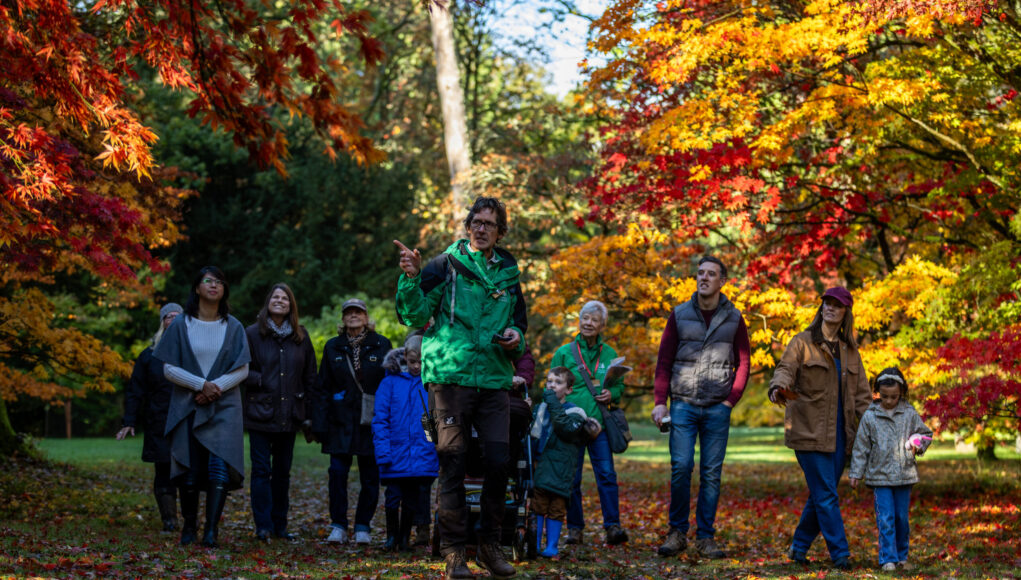
People visiting Westonbirt, The National Arboretum, are being invited to help track the changing colours of autumn as Forestry England launches a new nationwide citizen science project.
Autumn Leaf Watch will run from September to November, encouraging visitors to record what they see using Forestry England’s new online autumn colour tracker.
The information collected will help build a detailed picture of how autumn develops across England, including differences between regions, habitats and tree species.

It comes after an unusually hot and dry summer, which has put many trees under stress and prompted some to shed their leaves earlier than usual.
Forestry England experts say the weather over the coming weeks could have an important influence on how this year’s autumn display develops.
Some trees at Westonbirt are already showing signs of autumn, although the arboretum’s experts expect the display to continue developing throughout September, October and November.
Westonbirt’s collection includes around 1,800 tree species from six continents, creating a particularly long autumn display as different species respond to changing conditions at different times.
Chris Sorenson, Forest Management Advisor at Forestry England, said the timing and intensity of autumn colour could provide useful information about how forests are responding to changes in their environment.
“Autumn is one of nature’s most spectacular seasonal events, but it also gives us a fascinating insight into how the nation’s forests are responding to the world around them,” he said.
He added that understanding seasonal changes was becoming increasingly important as the climate changes.
“This year’s hot and dry summer has put many trees under stress, so it’s too early to say exactly what autumn will bring,” he said.
“But if we get some much-needed rainfall, there could still be a spectacular display of gold, amber and red.”
Autumn colour develops as trees prepare for winter. As daylight hours shorten and temperatures fall, trees gradually stop producing chlorophyll, revealing yellow and orange pigments already present in their leaves. Some species also produce red pigments during the autumn.
The timing and intensity of the change depends on a combination of factors including daylight, temperature, rainfall, soil moisture and the health of individual trees.
As a result, autumn can look very different from one year to the next and between different parts of the country.
Forestry England expects visitors to its forests to begin seeing more widespread signs of autumn colour from late September, with many locations typically reaching their peak during October and early November.
Through Autumn Leaf Watch, visitors will be able to record their observations and follow the changing colours as the season progresses.
Forestry England hopes the project will encourage people to spend more time outdoors while helping experts build a better understanding of one of nature’s most familiar seasonal transformations.
The project is being led through Forestry England, with visitors able to take part using the organisation’s autumn colour tracker.