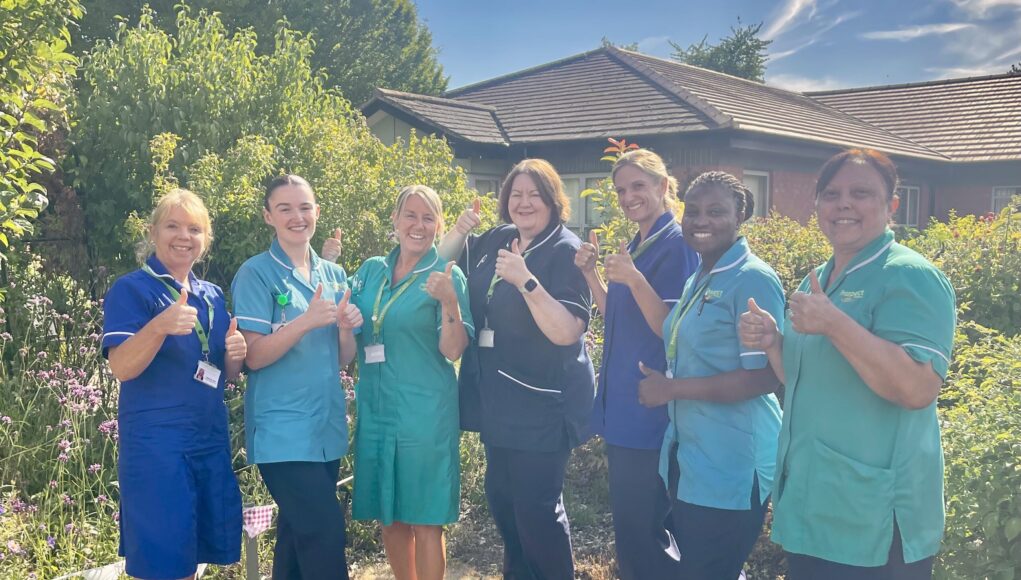
Prospect Hospice has announced plans to increase the number of beds in its Inpatient Unit by 50 per cent, following what it describes as an unprecedented level of support from the local community.
The Swindon and North Wiltshire hospice expects the expansion to be completed by January 2027, taking the number of dedicated inpatient beds to nine and allowing around 90 additional patients each year to receive specialist end-of-life care.
The beds will be staffed by specialist nurses, providing personalised care for patients while also supporting their families emotionally and practically at an incredibly difficult time.

The announcement comes after a particularly challenging period for the hospice. Earlier this year, Prospect Hospice revealed that it was having to turn away around six patients a week because of a lack of funding.
The financial pressures facing hospices are not unique to Swindon, with organisations across the country struggling with rising costs and insufficient statutory funding.
Just 16 per cent of Prospect Hospice’s annual funding is expected to come from government sources, leaving the organisation heavily reliant on the generosity of local people.
That support takes many forms, from donations and fundraising to shopping in Prospect Hospice’s 17 charity shops, visiting its café, volunteering, taking part in events and businesses supporting the hospice through partnerships.
Prospect Hospice Chief Executive Jeremy Lune said the reopening of the beds was a major step forward.
“It’s just brilliant that we are in the position to increase the number of beds on our IPU,” he said.
“We’ve been fortunate to have had an unprecedented level of community support in our 46-year history and this is a huge step forward in providing choice and consistency in end-of-life care.”
He added that being forced to turn away patients had been heartbreaking, but the response from the community had helped the hospice not only stabilise its position but begin to grow again.
“Turning away dying people is a heartbreaking position to be in, but now, thanks to the positive power of our community, we will be able to give more people the choice they deserve at the end of their lives,” he said.
“With an ageing population, the need for specialist care is continually increasing.”
The additional capacity could also help ease pressure on the NHS, allowing beds at Great Western Hospital to be used for patients requiring hospital treatment rather than those who would benefit from specialist hospice care.
Prospect Hospice currently cares for around 180 people each year in its inpatient unit. From January, it expects to be able to accommodate around 90 more.
However, the charity says its financial challenges have not disappeared. Care in the inpatient unit costs more than £1,000 per person per night, meaning continued community support remains vital.
The hospice would ultimately like to operate 12 inpatient beds, which it says is the number required by the local community.
Among those welcoming the announcement is James Wallace, whose wife Becca died at Prospect Hospice aged just 45.
Becca was one of the patients who received specialist palliative care at the hospice three years ago.
“When we would walk down the corridor to visit her, it was heartbreaking to walk past empty rooms,” said James.
“Together with our two teenage daughters, we were all supported through the difficult time and so it’s incredible to know that so many more families will benefit from the care and love that we experienced from Prospect Hospice.”
The news has also been welcomed by Hospice UK, which represents more than 200 hospices across the country.
Charlie King, Deputy Director of External Affairs at Hospice UK, described the reopening of the three beds as a testament to the support Prospect Hospice receives locally.
Across England, six in ten hospices have either already made cuts to frontline services or are considering doing so, according to Hospice UK.
Charlie said rising costs and insufficient government funding were placing increasing pressure on hospices and their ability to provide care.
“Time and again, communities step up to plug the gap,” he said. “This is amazing – but, in the long run, we need government to do the same, to play its part in ensuring a long-term future in which hospice care is there for all who need it.”
For Prospect Hospice, the reopening of the three beds represents a significant turnaround – and one made possible by the people of Swindon and North Wiltshire.
But with the cost of providing specialist care continuing to rise, the hospice will still need that community behind it as it works towards its longer-term ambition of providing 12 inpatient beds.
More information about Prospect Hospice and how to support its work is available through its website.