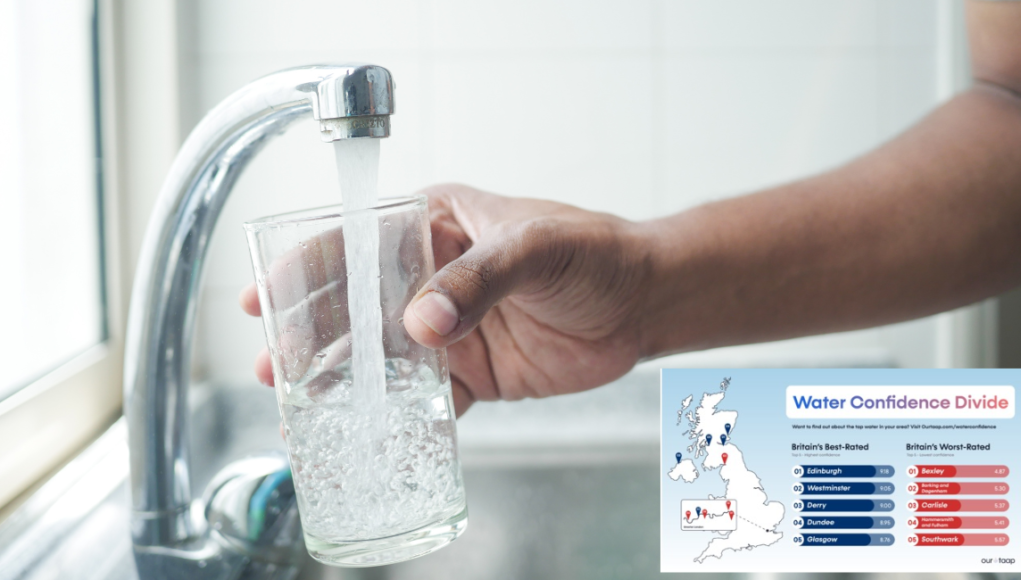
Britain’s tap water is widely regarded as some of the safest in the world, yet a new study suggests that many people remain far from convinced when it comes to what comes out of their own kitchen tap.
Research released by home water filtration company Our Taap has uncovered significant differences in how people rate the taste and quality of their tap water, with satisfaction varying not only across the country but also between neighbouring cities in the South West.
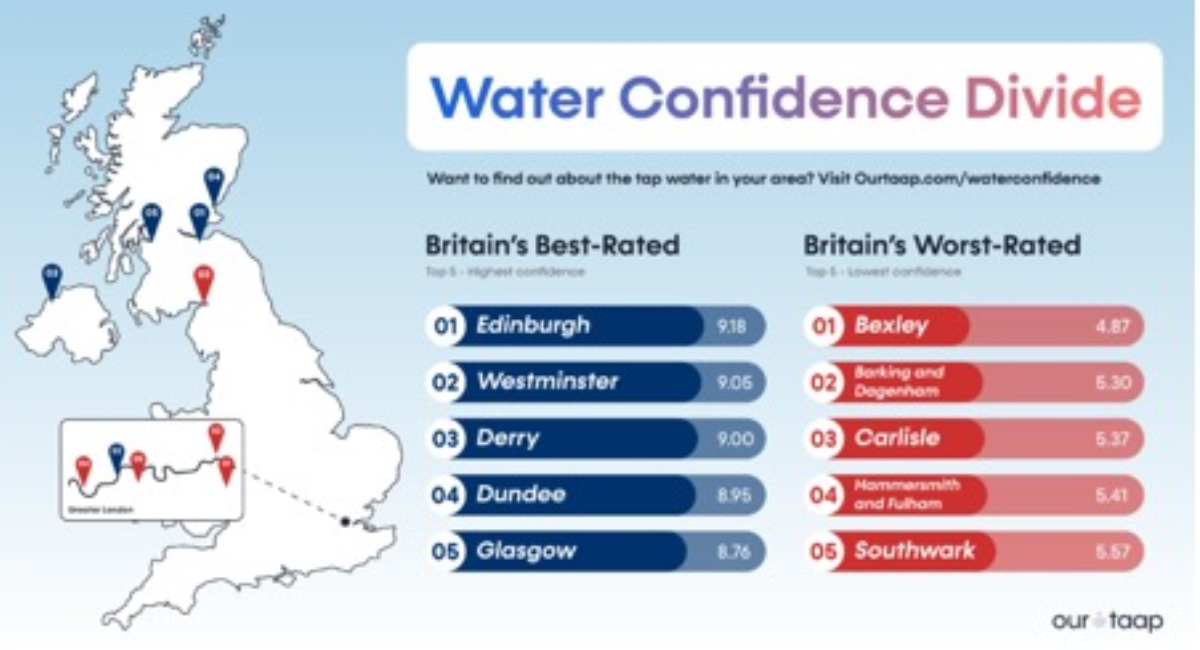

The findings are based on a nationwide survey of 2,000 adults, alongside postcode-level analysis of water characteristics including hardness and chlorine levels. Together, the data has been used to create the new Water Confidence Index, giving residents an insight into how people in their area rate their tap water.
While Edinburgh topped the national rankings with an average satisfaction score of 9.18 out of 10, Bexley recorded the lowest score at 4.87.
Closer to home, the South West presents a mixed picture.
Bristol achieved the region’s highest satisfaction rating at 8 out of 10, followed by Exeter on 7.6, Gloucester on 7.1 and Plymouth on 7. Bath received a score of 6.7, creating a noticeable gap despite its close proximity to Bristol.
The national average satisfaction score stands at 7.4.
The research also highlights how many people have adapted their daily routines because they are not entirely happy with the water from their tap. Across the UK, 85 per cent of respondents said they regularly change how they drink tap water, whether by chilling it, letting it run before filling a glass or adding cordial to improve the taste.
Only four in ten people said they happily drink tap water on a regular basis, while almost half admitted they have little understanding of what is actually in their local water supply.
For residents across the South West, several trends emerged.
Nearly half (49 per cent) reported issues with hard water or limescale in their homes. Almost half (46 per cent) said they would drink more water if it tasted better, while 23 per cent identified taste as one of the biggest drawbacks of their local supply.
The survey also found that 17 per cent had apologised to visitors because of the taste of their tap water.
Summer appears to make the issue more noticeable. One in four people said they drink less tap water during warmer weather because it comes out of the tap too warm, while the same proportion admitted they feel more dehydrated during the summer because they dislike the taste of warm tap water.
Researchers believe differences in water hardness and chlorine levels may help explain why satisfaction varies so much between different areas.
Dr Rupy Aujla, GP, nutritionist and founder of The Doctor’s Kitchen, said taste can have a real impact on hydration.
He said: “Drinking enough water is one of the simplest ways to support our health, but if people don’t enjoy the taste, they’re far less likely to drink enough. During warmer weather especially, making water more enjoyable could help people develop healthier hydration habits.”
Genevieve Upton, filtration expert at Our Taap, said that while Britain’s tap water is safe, taste is a separate issue.
She said: “Hardness, chlorine and limescale can all affect how water tastes, particularly when it comes out of the tap warm. Improving that experience can encourage people to choose water more often.”
The Water Confidence Index allows people to enter their postcode and compare local satisfaction levels alongside information about water hardness and chlorine levels, helping explain why water may taste different from one area to another.
Although the findings do not question the safety of the UK’s drinking water, they do suggest that where someone lives can influence how much they enjoy drinking it.