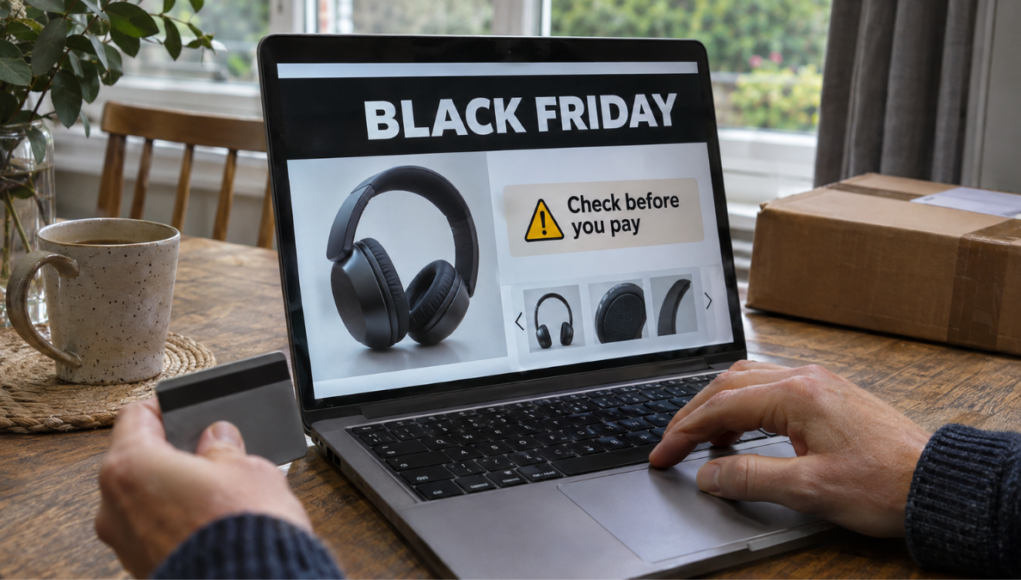
Swindon shoppers hunting for Christmas bargains are being urged to check where their money is going, as fraudsters circulate fake Black Friday offers before the main sales have begun.
Consumer cyber security company TrendLife says its scam-hunting team has already spotted fraudulent messages advertising early deals. Others claim shoppers have missed a sale, encouraging them to click through for another chance at a discount.
The warning comes as VoucherCodes forecasts Black Friday spending could reach £9.8 billion. For criminals, the rush to find a bargain provides an opportunity to catch people off guard.

According to TrendLife, messages using phrases such as “Early Black Friday”, “Pre-Black Friday” and “You missed our Black Friday sale” are among the tactics already being used.
The wording varies, but the pressure is familiar: an apparently generous discount, a deadline and little time to think before handing over payment details.
Convincing adverts and lookalike shops
TrendLife also warns that artificial intelligence is helping fraudsters produce more convincing messages, adverts and fake shopping websites.
Its research suggests 46 per cent of consumers are using or considering AI tools for festive shopping. The company says criminals are creating fake storefronts and lookalike websites which could also appear in recommendations from AI shopping assistants.
A suggested deal should therefore be checked with the retailer before any purchase is made.
Brett Parker, consumer partnerships lead at TrendLife, said fraudsters were exploiting the urgency surrounding Black Friday and Cyber Monday, when shoppers are keen to secure discounts before they disappear.
He warned that increasingly realistic emails and adverts could catch out even cautious customers.
Checks before the checkout
The advice for shoppers is straightforward:
Visit the retailer directly. Rather than following an unfamiliar promotional link, open the retailer’s official website or app and look for the offer there.
Read the address carefully. A familiar logo does not prove that an email or website belongs to the business it claims to represent. Check the sender’s full email address and the website address.
Pause before paying. A countdown or claim that stock is running out should not replace checks on the seller and the price.
Check AI recommendations. An offer suggested by a shopping assistant still needs to be verified with the retailer.
Treat security tools as an extra check. Scam-detection services may help flag suspicious links and messages, but shoppers should still check the seller before sharing personal or payment details.
The National Cyber Security Centre also advises shoppers to check that an online shop is legitimate and, where the official address is known, type it directly into the browser.
Anyone concerned that a fraudulent purchase has exposed their bank details should contact their bank through its official website or telephone number. Suspicious emails can be forwarded to report@phishing.gov.uk.
Further guidance is available from the National Cyber Security Centre.